
The Russians Are Coming
1968
No user ratings available yet
Representation score: 6.0 out of 10
Representation Score
Limited
1931
Director
Mikhail Kalatozov
Runtime
53 minutes
Average Rating
No ratings yetNew Showbiz Analysis
The film serves as a historical artifact of narrative subversion rather than a showcase for identity-based representation. Its primary value lies in its structural critique of state institutions, which led to its suppression by Soviet authorities. While the work lacks explicit diversity in terms of gender, race, or sexual orientation, it disrupts traditional war epic clichés. Instead of celebrating individual heroism, it focuses on the catastrophic consequences of technical and industrial negligence. Ultimately, the film prioritizes a realistic, fatalistic view of power over state-sanctioned optimism, suggesting that the stability of a collective depends on its smallest, most overlooked components.
Category Breakdown
The film does not include any characters with LGBTQ+ identities or queer narratives. It focuses solely on military logistics and industrial efficiency.
The narrative likely centers on male-dominated military and industrial spheres. While it may adhere to traditional roles, its focus on systemic failure potentially decenters the archetype of the invincible soldier.
As a Soviet production, the cast likely reflects the USSR's multi-ethnic composition. However, it is unclear if the film actively represents diverse groups or defaults to a standardized identity.
The film offers a complex critique of institutional infallibility. By highlighting how trivial negligence causes systemic collapse, it challenges the idealized, state-mandated image of military competence.
There is no documented evidence of characters with visible or invisible disabilities within the film's context.
Present on Screen
Limited or Absent
Official Synopsis
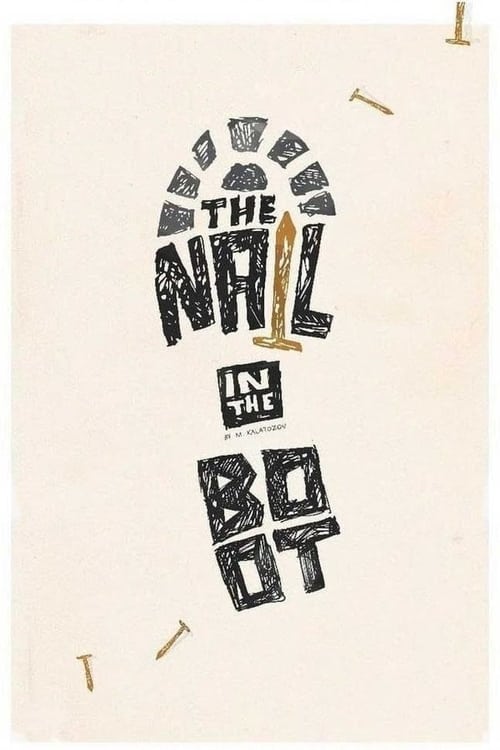
Banned in the Soviet Union for its "negative" content and never released, Kalatozov was forced to retreat from filmmaking for seven years because of this film. The film sets out to illustrate the old adage, "For want of a nail, the battle was lost," showing how the inferior quality of something so trivial as a nail in a soldier's boot leads inexorably to the capture of an armored train. Kalatozov had intended to demonstrate the crucial and universal importance of efficiency in Soviet industry, but the government decided that his fable gave a negative impression of the Red Army's capabilities.
1968

1925

1968

1930

1929
1943
1945
1956
No reviews yet. Be the first to share your thoughts on this movie!
Use the rating form above to leave a star rating and optional review.