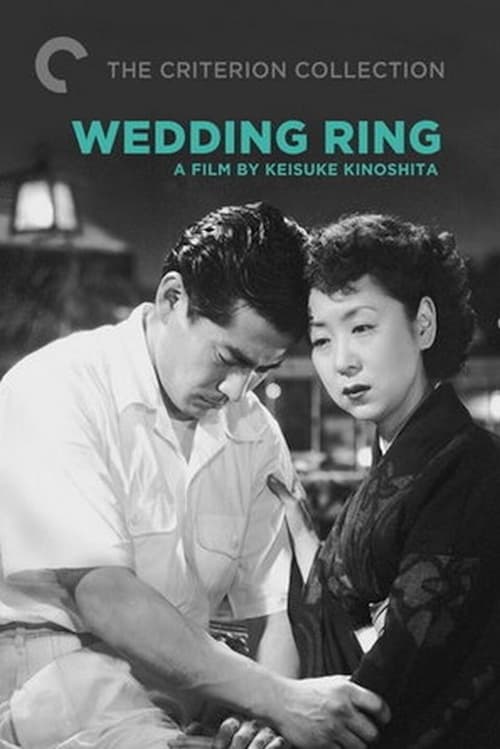
Wedding Ring
1950
No user ratings available yet
Representation score: 4.0 out of 10
Representation Score
Fair
1956
Director
Kōzaburō Yoshimura
Runtime
104 minutes
Average Rating
No ratings yetNew Showbiz Analysis
Undercurrent is a sophisticated psychological drama that emphasizes character development over conventional genre clichés. Its main strength lies in its nuanced portrayal of women's ability to drive the story, breaking away from the passive stereotypes typical of 1950s cinema. However, the film remains confined to its historical context, presenting a culturally uniform perspective and a strictly heterosexual romantic storyline. It lacks the diverse representation seen in contemporary storytelling. Overall, the film excels as a character-driven narrative that challenges social norms through the lens of individual emotional experiences.
Category Breakdown
The film follows a traditional focus on straight relationships, with no LGBTQ+ narratives present. The central romance involves a married professor and a kimono maker.
The movie challenges mid-century gender roles by focusing on the female protagonist's emotional journey and psychological struggles. It highlights her active role in driving the story rather than portraying her as passive.
Set in post-war Kyoto, the film features a predominantly Japanese cast. It reflects its specific historical and cultural context without relying on Western-centric casting.
The story examines personal morality and the erosion of societal norms. It offers a flexible understanding of human behavior and desires, moving away from strict moral codes.
There is no indication of the portrayal of physical or neurodivergent disabilities in the film.
Present on Screen
Limited or Absent
Official Synopsis
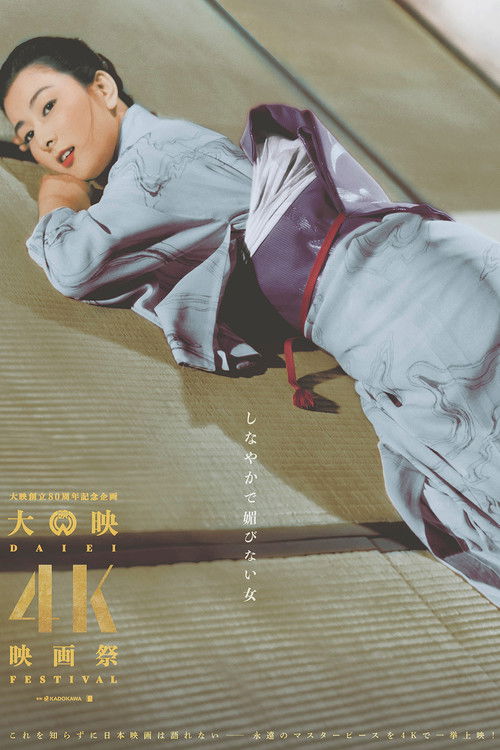
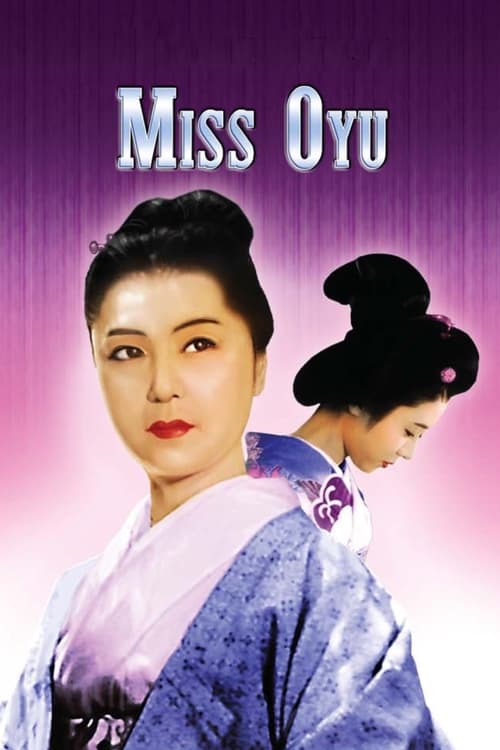
In Kyoto a young kimono maker with traditional ideas gets involved with a married professor.
1950
1955
1969
1951
1957
1955
1956
1951
No reviews yet. Be the first to share your thoughts on this movie!
Use the rating form above to leave a star rating and optional review.