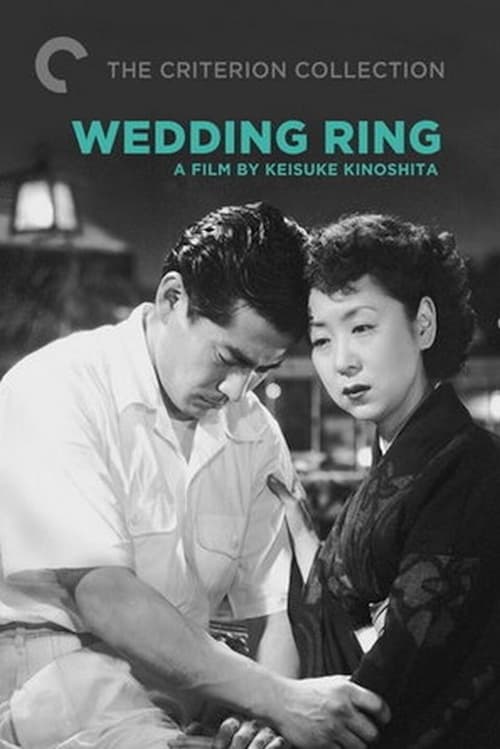
Wedding Ring
1950
No user ratings available yet
Representation score: 4.0 out of 10

Representation Score
Fair
1955
Director
Keisuke Kinoshita
Runtime
99 minutes
Average Rating
No ratings yetNew Showbiz Analysis
Keisuke Kinoshita’s drama offers a compelling subversion of mid-century domesticity. By focusing on a woman's struggle against a failed patriarchal marriage, the film prioritizes female emotional authenticity over traditional social hierarchies. Though the film lacks modern multi-layered markers like multi-ethnic casting or explicit LGBTQ+ identities, it excels as a nuanced character study. It effectively uses the protagonist's personal conflict with societal expectations to drive the drama. Ultimately, the film's strength lies in its critique of rigid community standards and its portrayal of the dysfunction inherent in traditional social structures.
Category Breakdown
The film does not include any explicit LGBTQ+ characters or non-straight identities. The story revolves around a widow and her childhood sweetheart within a conventional romantic structure.
The narrative centers on a widow's emotional independence following a relationship with an abusive and neglectful husband. This shifts the focus from patriarchal dominance to the woman's personal empowerment.
Given its 1955 Japanese production, the cast and setting are culturally uniform. The film examines social norms within a specific, localized cultural context.
The narrative dismantles the idealized family unit by depicting a dysfunctional marriage. It uses a minor social scandal to critique the rigid morality of the time.
There is no information about the depiction of physical or neurodivergent disabilities in this work.
Present on Screen
Limited or Absent
Official Synopsis
A young widow, made world weary by her abusive, neglectful husband, finds herself in a minor scandal when she's seen with her intense, no-nonsense childhood sweetheart.
1950

1955

1961

1948
1956

1952

1957
1956
No reviews yet. Be the first to share your thoughts on this movie!
Use the rating form above to leave a star rating and optional review.