
Barrio Cuba
2001
No user ratings available yet
Diversity score: 7.0 out of 10
2024
Director
Kang Seung-yong
Runtime
105 minutes
Average Rating
No ratings yetSynopsis
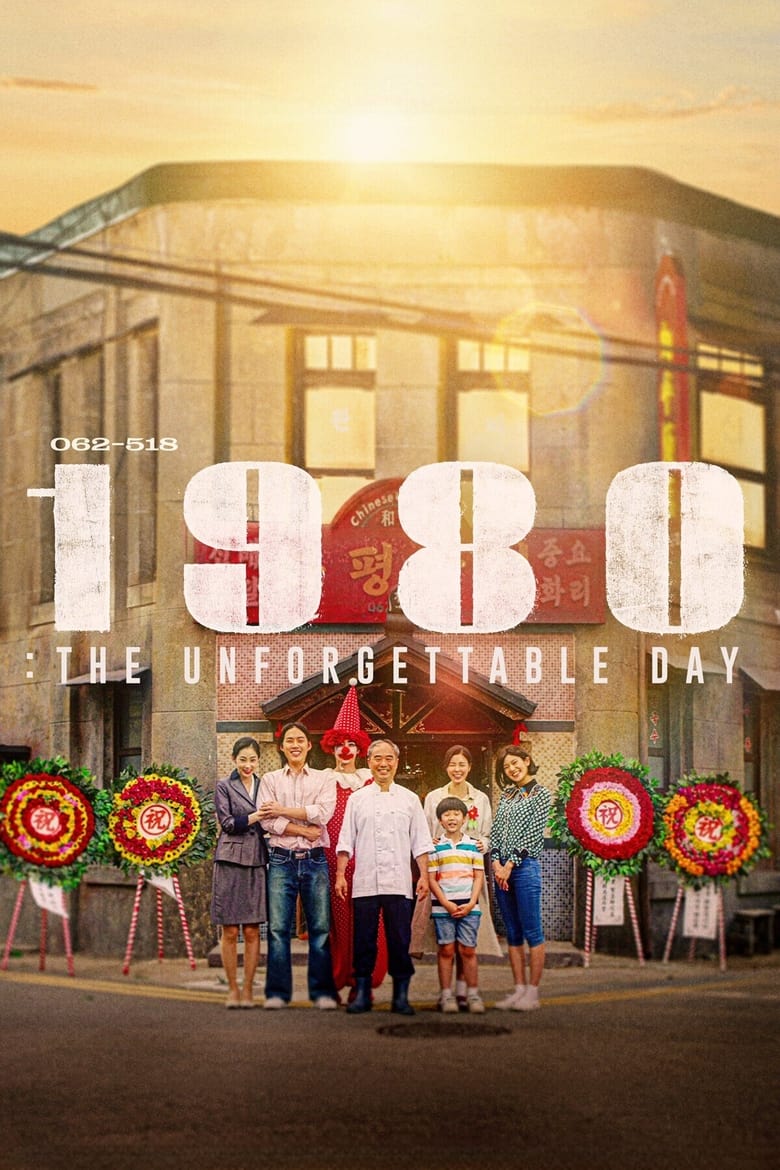
There is HWAPYONG Restaurant with full of hopes of the family of three generations. Grandfather, the first-generation owner, and the first son, the second-generation owner, who lives as a fugitive after being branded as a communist and his wife and Cheol-soo’s mom who has to work hard by juggling work and family without complaint. The second son, Cheol-soo’s uncle, who sometimes acts like a child with an excuse of being the second son but loves Cheol-soo more than anyone and seriously cares about the restaurant. To the third generation, young Cheol-soo, family is the most precious. By the time when ‘Seoul Spring’ longing for democratization came to nothing due to ‘Retreat from Seoul Station’ in 1980, there were a series of peaceful protests in Gwangju, Jeolla Province. In warm May, a large dark cloud is looming over HWAPYONG Restaurant, the home and everything of this ordinary family of Cheol-soo, in the middle of Gwangju.
Overall Score
Good
Category Breakdown
LGBTQ+ Representation
The film centers on a multi-generational family unit during a period of intense political upheaval. There is no explicit evidence of non-heteronormative identities or LGBTQ+ characters within the narrative.
Gender Representation
The story highlights female resilience through Cheol-soo’s mother, who manages both professional and domestic labor. Her character emphasizes the agency required to sustain a family during systemic hardship.
Racial & Ethnic Diversity
As a South Korean production, the cast is ethnically homogeneous. The film focuses on a localized exploration of identity and the specific ethnic experience of the Gwangju region.
Religious & Cultural Diversity
The narrative critiques state power by centering on the Gwangju Uprising. It deconstructs official histories by focusing on the systemic victimhood of ordinary citizens during political suppression.
Disability Representation
The current narrative does not feature characters with visible or invisible disabilities. No information is available regarding representation in this category.
Strengths
Areas for Improvement
AI Analysis
The film succeeds in humanizing historical trauma by shifting the focus from high-level political actors to the domestic sphere. By centering the Hwapyong Restaurant family, the story illustrates how state-driven political movements directly impact ordinary lives and familial stability. The narrative effectively uses the Gwangju protests to critique institutional authority and the corruption of national power. This approach provides a sophisticated look at social justice through the lens of personal struggle and grassroots resistance. While the film offers deep cultural and historical critique, it remains limited in its breadth of identity representation. The focus is primarily on a specific ethnic and familial context, leaving other demographic categories unaddressed.
2001

1982

2024

2005

2023
2016
2015

2006
2010

2019
2020
2020
No reviews yet. Be the first to share your thoughts on this movie!
Use the rating form above to leave a star rating and optional review.