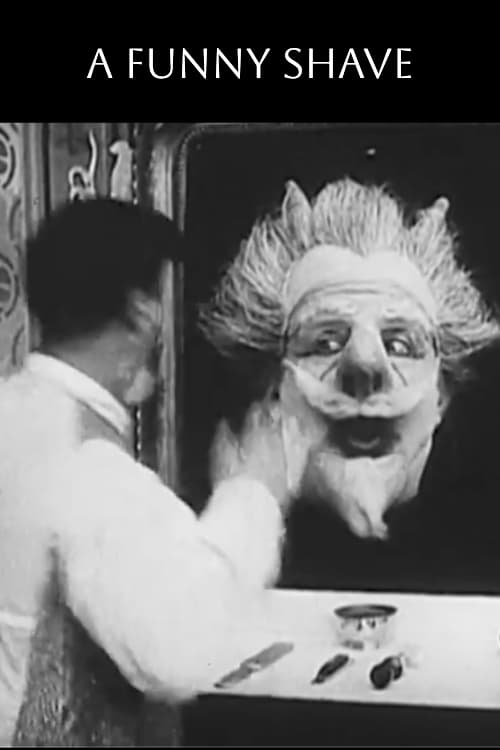
A Funny Shave
1905
No user ratings available yet
Diversity score: 1.8 out of 10
No Poster Available
1900
Runtime
1 minutes
Average Rating
No ratings yetSynopsis
"This funny individual will make you laugh until your sides ache. He is funny in all his actions, yet when he puts on his shoes you can imagine the noise he can make when he dances an ordinary clog. The shoes referred to are made of some elastic material which enables Little Tich to bow almost to the floor without bending his legs, the spring in the shoes carrying him down and up again. He places his hat on the floor and, leaning over on the toes of his wonderful shoes, dips his head into the hat and comes up without having to move from the spot or to bend his legs. He is a comical looking sight at best, being made up to suit the part, and he will make you laugh whether you want to or not."
Overall Score
Minimal
Category Breakdown
LGBTQ+ Representation
The film is a solo performance piece centered on a male music hall comedian. It contains no evidence of non-cisnormative gender identities or same-sex intimacy.
Gender Representation
Alice Guy-Blaché’s direction provides a subtle subversion of era-specific gendered labor expectations. However, the on-screen content focuses solely on a male performer, lacking engagement with gendered power dynamics.
Racial & Ethnic Diversity
The film features a homogeneous cast centered on the performer Little Tich. There is no evidence of racial blending or non-white casting within the production.
Religious & Cultural Diversity
This work functions as a traditional vaudeville performance. It adheres to standard entertainment formats and does not engage in critiques of Western institutions or religious structures.
Disability Representation
The routine utilizes physical eccentricity and specialized footwear for slapstick comedy. It does not portray neurodivergence or disability with agency, using physical oddity primarily as a comedic tool.
Strengths
Areas for Improvement
AI Analysis
Alice Guy-Blaché’s presence as a director provides a vital historical counter-narrative to the male-dominated origins of cinema. Her creative agency represents an early disruption of industry norms. However, the film's content is a localized, traditional comedic routine. It lacks intersectional complexity and does not intentionally disrupt social hierarchies, functioning instead as a showcase of individual physical skill. The performance relies on a homogeneous cast and conventional entertainment frameworks, offering little in the way of progressive representation or social deconstruction.
1905

1914
1903
1914
1900
1904
1933
1938
1909
1900
1906

1909
No reviews yet. Be the first to share your thoughts on this movie!
Use the rating form above to leave a star rating and optional review.