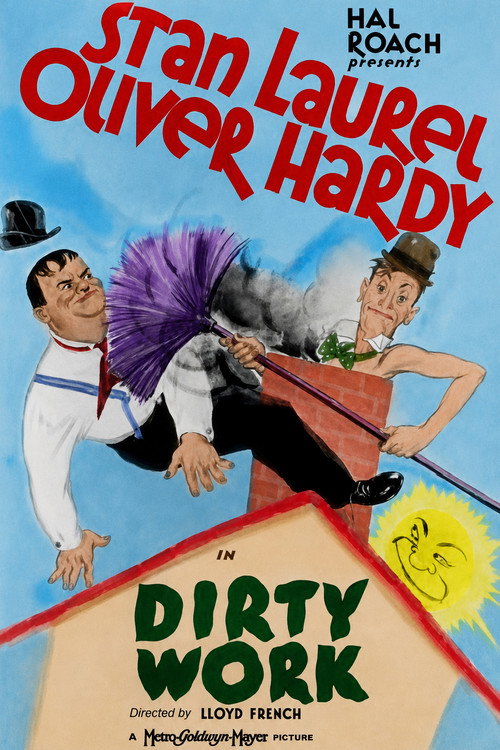
Dirty Work
1933
No user ratings available yet
Representation score: 1.9 out of 10
Representation Score
Limited
1933
NRDirector
Lloyd French
Runtime
19 minutes
Average Rating
No ratings yetNew Showbiz Analysis
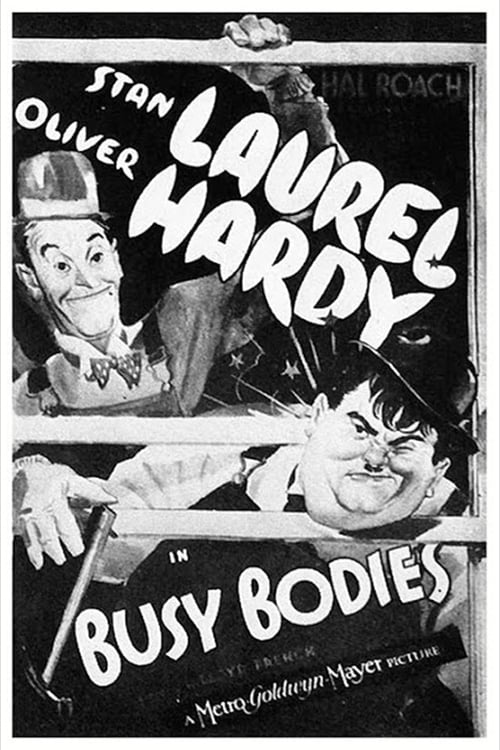
Busy Bodies is a product of its time, prioritizing physical slapstick humor over social commentary. The narrative is confined to a traditional industrial setting, focusing on the comedic mishaps of Laurel and Hardy. The film presents a homogeneous cast and a strictly male-centric workspace, relying on established comedic structures that do not challenge the social norms of the early 1930s. Ultimately, the work functions as a standard comedy short, offering little in the way of diverse character perspectives or systemic narrative disruption.
Category Breakdown
The film does not include any characters or narratives related to LGBTQ+ identities.
The story focuses exclusively on male protagonists within a male-dominated sawmill environment.
The cast appears to be a homogeneous depiction of the American working class, with no indication of diverse representation.
The film follows traditional comedic clichés of the era, depicting a standard industrial workplace without offering any cultural critique.
Physical clumsiness is used as a comedic device rather than a meaningful portrayal of disability.
Present on Screen
Limited or Absent
Official Synopsis
In this short film, Laurel and Hardy wage battle with inanimate objects, their co-workers, and the laws of physics during a routine work day at a sawmill.
1933
1930

1922

1933
1944

1922
1933
1928
No reviews yet. Be the first to share your thoughts on this movie!
Use the rating form above to leave a star rating and optional review.