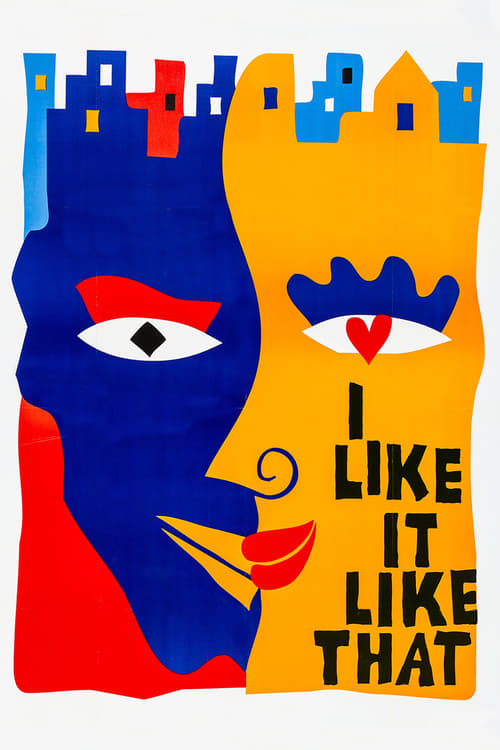
I Like It Like That
1994
No user ratings available yet
Diversity score: 7.7 out of 10

1976
RDirector
Jamaa Fanaka
Runtime
100 minutes
Average Rating
No ratings yetSynopsis
A naive young woman moves from the South to stay with her aunt and uncle in Compton. As an outsider, she struggles at first to find her footing, but soon falls into the middle of a community of rebellious youth. She soon becomes more and more aware of the social injustices of the big city.
Overall Score
Good
Category Breakdown
LGBTQ+ Representation
The film focuses on a protagonist navigating a community of rebellious youth. While the narrative explores non-traditional social structures, specific non-cisnormative identities are not explicitly detailed.
Gender Representation
The story centers on a female protagonist's intellectual and social awakening. Her journey from a naive outsider to a socially conscious individual provides her with significant agency.
Racial & Ethnic Diversity
By centering the narrative in Compton, the film prioritizes Black lived experiences. It uses the Black experience as the primary lens to examine systemic power dynamics.
Religious & Cultural Diversity
The film engages in a critique of systemic structures and institutional authority. It frames anti-establishment sentiment as a response to the social injustices found in the big city.
Disability Representation
There is no specific evidence regarding the portrayal of physical or neurodivergent disabilities within the narrative.
Strengths
Areas for Improvement
AI Analysis
Emma Mae is a significant work of independent Black cinema that disrupts the conventional cinematic hierarchies of its era. By centering a Black female protagonist, the film moves away from Anglo-centric perspectives to focus on authentic community narratives. The film's strength lies in its social realism and its focus on the transition from Southern life to the urban complexities of Compton. This setting allows for a deep exploration of systemic injustice and community-driven awareness. While the film excels in racial and gendered agency, it lacks specific details regarding LGBTQ+ or disability representation. However, its overall architecture remains a progressive challenge to traditional Western storytelling.
1994
1979
1991
1975
1971
1996
1986
1987
1967
1994
1983
1989
No reviews yet. Be the first to share your thoughts on this movie!
Use the rating form above to leave a star rating and optional review.