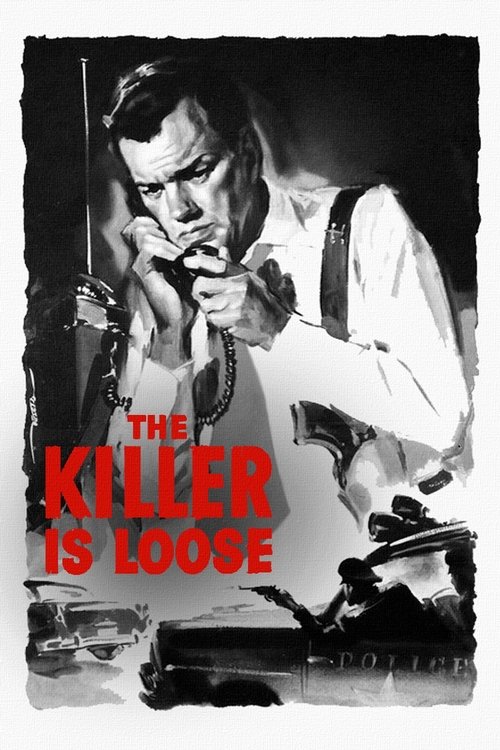
The Killer Is Loose
1956
No user ratings available yet
Diversity score: 1.6 out of 10

1954
NRDirector
Hugo Fregonese
Runtime
80 minutes
Average Rating
No ratings yetSynopsis
Vicious gangster Vincent Canelli pulls off a daring prison escape just moments before going to the electric chair, taking with him Peter Manning – a bank robber and cop killer who was to die right after him. Taking several hostages along, they try to get their hands on the loot from Manning’s robbery to finance their escape from the country.
Overall Score
Minimal
Category Breakdown
LGBTQ+ Representation
The film lacks any presence of non-heteronormative identities. Character dynamics are strictly defined by traditional masculine archetypes and heteronormative social structures typical of the 1950s.
Gender Representation
Narrative focus is almost exclusively centered on male agency. Women occupy secondary, peripheral roles, functioning primarily as supporting elements rather than drivers of the plot.
Racial & Ethnic Diversity
The cast is predominantly white and homogeneous. The film reflects the era's standard of depicting crime through a singular, Anglo-centric lens without intentional racial blending.
Religious & Cultural Diversity
The film operates within a conventional framework of mid-century morality. It depicts criminal behavior through a lens of consequence, supporting the stability of Western institutions.
Disability Representation
There are no prominent depictions of visible or invisible disabilities. Characters are defined by their socioeconomic status or professional roles rather than neurodivergence or physical disability.
Strengths
Areas for Improvement
AI Analysis
Black Tuesday is a quintessential mid-century crime thriller that adheres strictly to the social and gender hierarchies of its era. The narrative prioritizes masculine agency and traditional power structures, leaving little room for diverse perspectives. The film's demographic makeup is largely homogeneous, reflecting the standard production practices of 1954. It functions as a conventional genre piece where the tension is driven by law enforcement and criminal archetypes rather than social subversion. Ultimately, the work lacks the intentionality required to disrupt established tropes, resulting in a narrow representation of identity and culture.
1956
1953
1949
1951
1954
1939
1957
1959
1953
1958
1955
1972
No reviews yet. Be the first to share your thoughts on this movie!
Use the rating form above to leave a star rating and optional review.