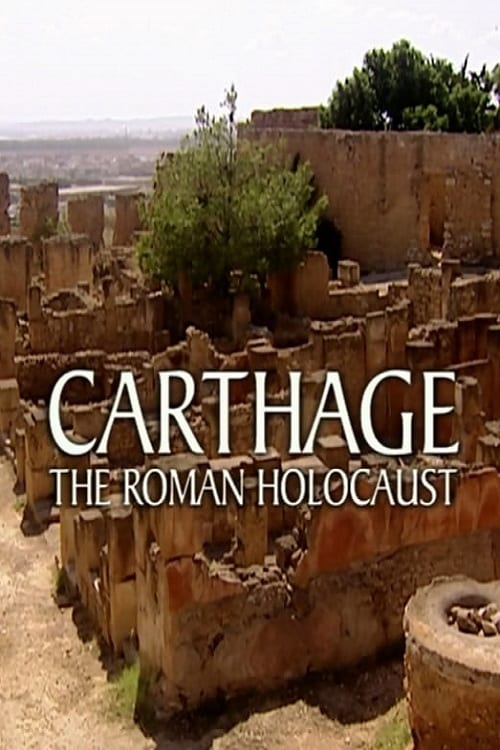
Carthage: The Roman Holocaust
2004
No user ratings available yet
Diversity score: 4.8 out of 10

2022
Director
Frédéric Wilner
Runtime
90 minutes
Average Rating
No ratings yetSynopsis
Why did the Roman Empire, which dominated Europe and the Mediterranean for five centuries, inexorably weaken until it disappeared? Archaeologists, specialists in ancient pathologies and climate historians are now accumulating clues converging on the same factors: a powerful cooling and pandemics. A disease, whose symptoms described by the Greek physician Galen are reminiscent of those of smallpox, struck Rome in 167, soon devastating its army. At the same time, a sudden climatic disorder that was underway as far as Eurasia caused agricultural yields to plummet and led to the westward migration of the Huns. Plagued by economic and military difficulties, attacked from all sides by barbarian tribes, the Roman edifice gradually cracked.
Overall Score
Fair
Category Breakdown
LGBTQ+ Representation
The documentary focuses on epidemiological and climatic factors rather than social identities. There are no explicit LGBTQ+ character arcs or narratives present.
Gender Representation
The narrative prioritizes systemic forces like pandemics over individual agency. While the physician Galen is mentioned, the film lacks exploration of gendered power dynamics.
Racial & Ethnic Diversity
The film disrupts Eurocentric narratives by highlighting the impact of the Huns and Eurasian migrations. It shifts agency away from a purely Roman-centric perspective.
Religious & Cultural Diversity
The film adopts a secular, scientific framework. It replaces moralistic or providential explanations for Rome's fall with materialist views on disease and climate.
Disability Representation
Ancient pathologies and smallpox-like symptoms are discussed. However, these are treated as epidemiological data points rather than character-driven explorations of disability.
Strengths
Areas for Improvement
AI Analysis
The documentary offers a refreshing departure from 'Great Man' history by focusing on systemic and environmental drivers of imperial collapse. By centering climate shifts and migratory patterns, it successfully challenges traditional Eurocentric perspectives on Roman exceptionalism. However, the film's scientific and macro-historical focus limits its exploration of social identities. The emphasis on pathogens and weather patterns leaves little room for character-driven narratives regarding gender, sexuality, or individual lived experiences. Ultimately, while the film excels at providing a multi-disciplinary view of history, it remains a specialized scientific inquiry rather than a study of intersectional human identities.
2004

2013
2022

1995

2007

2018

2019

2014

2017

1977

2015

2021
No reviews yet. Be the first to share your thoughts on this movie!
Use the rating form above to leave a star rating and optional review.