Miracle
1982
No user ratings available yet
Representation score: 8.0 out of 10
Representation Score
Fair
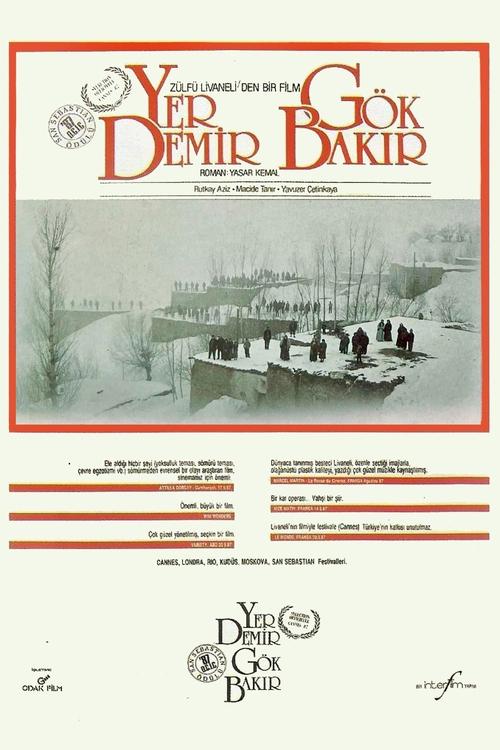
1987
Director
Zülfü Livaneli
Runtime
94 minutes
Average Rating
No ratings yetNew Showbiz Analysis
Iron Earth, Copper Sky is a sophisticated critique of systemic oppression that deconstructs traditional authority. It replaces the cliché of the virtuous hero with a malcontent, suggesting that leadership can emerge from collective perception rather than institutional mandate. The film excels in its cultural specificity, moving away from Western-centric storytelling to explore the friction between grassroots ability to act and feudal economic structures. By focusing on the villagers' struggle against the landlord, it provides a powerful lens on class and identity. However, the film's diversity is uneven. While it offers deep social and cultural commentary, it lacks representation for LGBTQ+ identities and disability, leaving significant gaps in its inclusive scope.
Category Breakdown
The film does not include any characters or stories related to LGBTQ+ identities.
The story focuses on a male character who challenges traditional masculine authority. However, there is no explicit mention of women's ability to drive the story or roles.
The film presents a non-Western social structure and shifts focus away from Anglo-centric views. It highlights the socio-economic struggles of a rural community.
The movie critiques feudal hierarchies and uses spirituality to promote social mobilization. It emphasizes collective resistance against oppressive power structures.
There is no mention of characters with visible or invisible disabilities in the film.
Present on Screen
Limited or Absent
Official Synopsis
In this deeply symbolic and visually lush film, as far as Tashbash is concerned, he's just a malcontent, a fairly ordinary hell-raiser who has gotten into trouble with the law in the past. Sure, he hates the village headman who is a toady to the region's oppressive landlord, and he dislikes the fact that everyone looks to the headman for help because they have no place else to turn, but he's just an ordinary guy and has no solutions for his fellow villagers. However, after one of them has a vision in which Tashbash is shown to be a manifestation of one of their more important local saints, the villagers unite as one in seeking him out for help with the upcoming visit of the landlord to collect rents which they can't pay. Their adulation and reverence is so persistent that eventually even Tashbash becomes a believer.
1982

1943
2011
1962

1980
1978
1968
1956
No reviews yet. Be the first to share your thoughts on this movie!
Use the rating form above to leave a star rating and optional review.