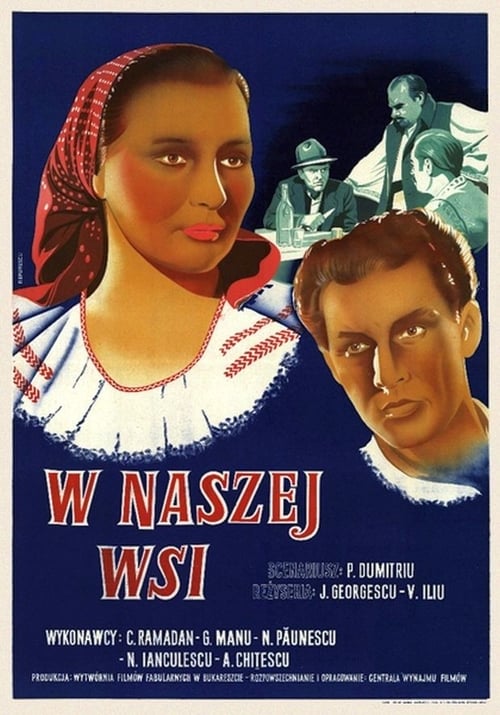
In Our Village
1951
No user ratings available yet
Representation score: 1.9 out of 10
Representation Score
Limited
1980
Director
Mircea Daneliuc
Runtime
99 minutes
Average Rating
No ratings yetNew Showbiz Analysis
Fox Hunting is a gritty, naturalist drama that emphasizes historical and geographical specifics over broad demographic representation. It portrays a culturally uniform view of 1950s Romania, focusing on individual resistance against state-mandated collectivization. Despite the lack of representation for women, LGBTQ+ individuals, and minority groups, the film offers substantial intellectual depth. It challenges traditional moral frameworks, favoring a nihilistic, secular perspective that questions institutional authority. Ultimately, the film’s value lies in its cultural critique rather than its social inclusivity. It explores human instinct and social collapse within a rigid, patriarchal, and homogeneous context.
Category Breakdown
The film centers on a hyper-masculine rural environment where there is no depiction of non-traditional gender identities or same-sex relationships, reinforcing traditional assumptions about gender and sexuality.
The story unfolds within a strictly patriarchal framework. Women are largely absent from the central conflict, which is driven by male-dominated social dynamics and physical strength.
The casting reflects a 1950s Romanian village, maintaining ethnic homogeneity. While historically accurate, the film does not include diverse racial or ethnic groups.
The film stands out by breaking down traditional institutions and morality. It criticizes state-enforced collectivization and replaces conventional ethics with a primal predator-prey dynamic.
The film does not significantly address neurodivergence or physical disabilities. Characters are defined by their physical abilities and predatory instincts rather than nuanced portrayals of disability.
Present on Screen
Limited or Absent
Official Synopsis
A Romanian village in the 50s. Năiţă Lucean, a cunning and stubborn peasant, opposes the collectivization process using all possible artifice. He instinctively feels that signing his land and cattle over to the state can only bring bad times for him. His only certainty is the ownership of this insufficient and barren plot of land. Although he strongly opposes it, the idea of the collective good is forcibly enforced.
1951
1930
1981

1949
2013
1990
1978

1960
No reviews yet. Be the first to share your thoughts on this movie!
Use the rating form above to leave a star rating and optional review.