Anne of Green Gables
1934
No user ratings available yet
Representation score: 1.4 out of 10
Representation Score
Minimal
1936
ApprovedDirector
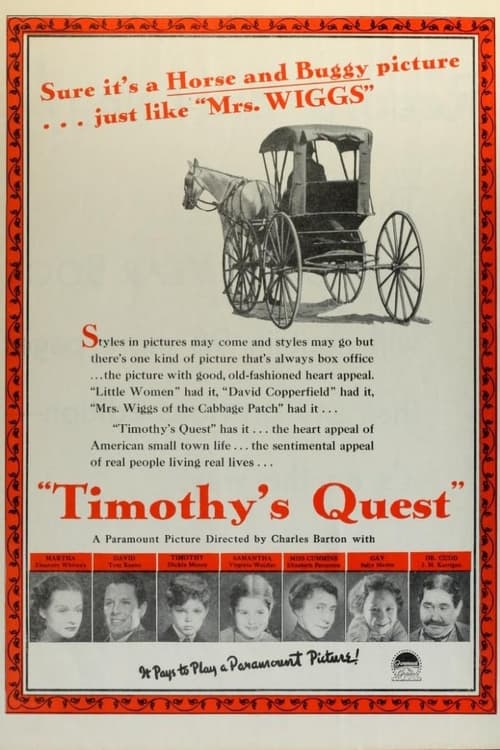
Charles Barton
Runtime
65 minutes
Average Rating
No ratings yetNew Showbiz Analysis
Timothy's Quest is a product of its time, adhering closely to the social norms and moral frameworks of 1930s studio cinema. The narrative emphasizes traditional romantic resolutions and family structures, offering little space for diverse viewpoints. The film heavily relies on well-known clichés, such as the portrayal of unmarried women and the pursuit of heterosexual stability. This results in a narrow social perspective that lacks depth in representing different aspects of identity. Overall, the movie functions as a typical domestic comedy that upholds the status quo without challenging it through varied representation.
Category Breakdown
The film focuses on traditional heterosexual relationships, with no indication of characters who identify as LGBTQ+. The main characters, Martha and David, follow a conventional courtship path.
Women in the film are portrayed primarily through domestic and relational roles. Vilda Cummins is characterized by the 'old maid' stereotype, while Martha serves mainly as a catalyst for romance.
The cast appears uniform, set in a typical Western household. There are no characters mentioned from non-white or non-Anglo-Saxon backgrounds.
The story upholds traditional Western values concerning family and home life. It follows a conventional moral storyline that emphasizes social conformity and community stability.
There are no visible or hidden disabilities represented among the main characters in the provided information.
Present on Screen
Limited or Absent
Official Synopsis
Timothy (Dickie Moore), an orphan, is sent with his sister, Gay (Sally Martin), to a farm run by Vilda Cummins (Elizabeth Patterson, an old maid with a dislike for children. Timothy eventually wins her over, and also pushes along the romance for her niece, Martha (Eleanore Whitney), with David Masters (Tom Keene).
1934

1927
1926

1938
1918
1934

1933
1927
No reviews yet. Be the first to share your thoughts on this movie!
Use the rating form above to leave a star rating and optional review.