
Daisy Kenyon
1947
No user ratings available yet
Representation score: 2.7 out of 10

Representation Score
Minimal
1961
ApprovedDirector
David Miller
Runtime
107 minutes
Average Rating
No ratings yetNew Showbiz Analysis
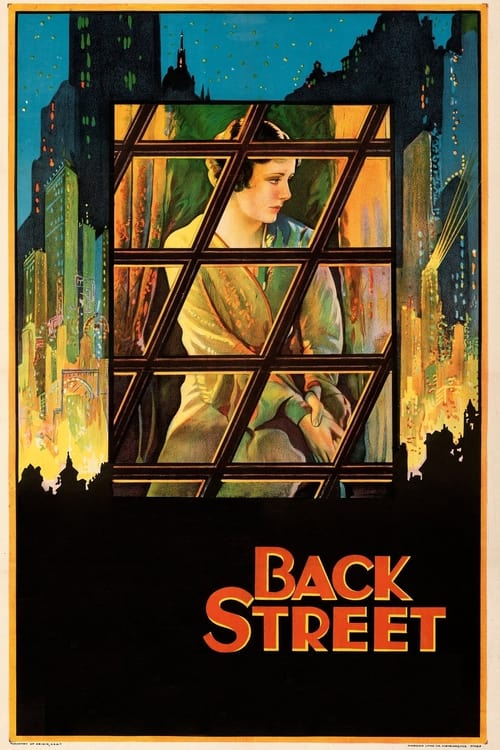
Back Street is a mid-century melodrama that emphasizes individual romantic conflict over social critique. While the female lead achieves professional success, her character arc remains tied to traditional gendered power dynamics and emotional dependency. The film adheres to the era's social constraints, featuring a homogeneous cast and a narrative focused on disrupting the nuclear family. It reinforces existing social hierarchies rather than challenging them. Ultimately, the film operates as a character study of obsession within the narrow, conventional framework of 1961 studio cinema.
Category Breakdown
The film centers on heterosexual relationships and marital infidelity, with no representation of non-straight or non-cisgender identities.
Rae Smith is shown as a successful fashion designer but her personal life is dominated by her obsession with a married man, and the film uses clichéd clichés like the 'shrewish' wife.
The cast is primarily white and Anglo-Saxon, with international settings in New York and Rome not reflected in the homogeneous cast.
The story explores moral ambiguity through an illicit affair but avoids critiquing Western institutions, focusing instead on personal tensions within families.
There are no visible or invisible disabilities portrayed. Character struggles center on psychological obsession and interpersonal conflict rather than physical or neurodivergent impairments.
Present on Screen
Limited or Absent
Official Synopsis
Ambitious but thwarted, Rae Smith meets handsome U.S. Marine Paul Saxon, of the Saxon department store chain, as he passes through Lincoln, Nebraska, on his way home from World War II. There's a definite spark between them but circumstances intervene and he leaves town without her. Later she learns he's married. Determined to make it as a fashion designer, Rae moves to New York City and becomes a great success. One day she happens to meet Paul again and again there's that spark but he's still married so, as a form of escape, Rae moves to Rome to set up shop. Once again she meets Paul and finally they begin an actual affair since Paul's shrewish, drunken wife, Liz, won't give him a divorce. Time passes, the affair continues whenever time and place permit, but then, Paul's young son finds out about Rae and Rae's back-street world begins to crumble.
1947

1955
1955
1962
1932
1964
1954
1952
No reviews yet. Be the first to share your thoughts on this movie!
Use the rating form above to leave a star rating and optional review.