Las tandas del principal
1949
No user ratings available yet
Representation score: 1.8 out of 10
Representation Score
Limited
1951
Director
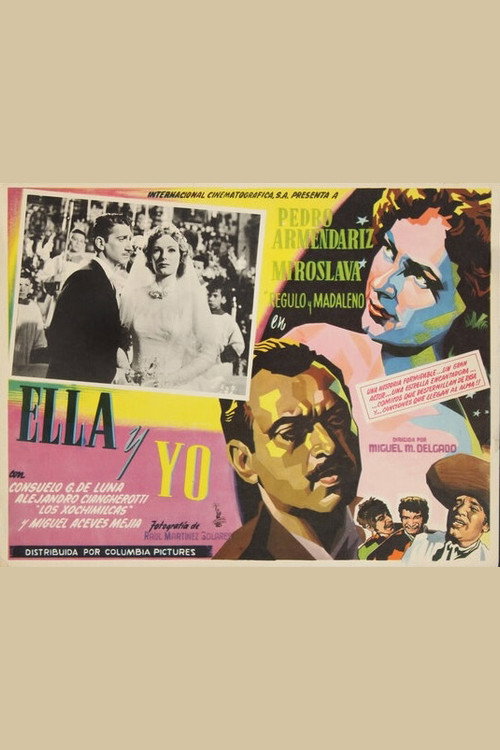
Miguel M. Delgado
Runtime
88 minutes
Average Rating
No ratings yetNew Showbiz Analysis
Ella y Yo is a conventional romantic comedy from the Golden Age of Mexican cinema. It relies on established genre clichés, particularly the moral reform of a womanizer through a romantic encounter. The film operates within the traditional social structures of its time. While it centers a non-Anglo-Saxon cultural context, it does not challenge systemic hierarchies or present diverse identities. Ultimately, the narrative prioritizes individual character development and courtship over social critique or diverse representation.
Category Breakdown
The film centers on a heterosexual relationship and does not include any non-cisgender identities or critiques of the assumption that everyone is straight or cisgender.
The story follows traditional gender roles where a woman serves as a moral guide for a male lead. This 'reforming woman' cliché is typical of mid-century cinema.
As a product of the Golden Age of Mexican cinema, the film highlights a non-Anglo-Saxon cultural context. However, it does not disrupt racial hierarchies.
The plot emphasizes individual romantic morality and personal transformation. It aligns with mid-century values regarding courtship rather than exploring secular or anti-Western themes.
The narrative does not mention any characters with visible or invisible disabilities.
Present on Screen
Limited or Absent
Official Synopsis
Pedro Muñoz is a womanizer that does not escape one until Irene Garza arrives and makes him to see his luck, while the aunt of her tries to separate them.
1949

1992
1951
1975
1947
1956
1959
1967
No reviews yet. Be the first to share your thoughts on this movie!
Use the rating form above to leave a star rating and optional review.