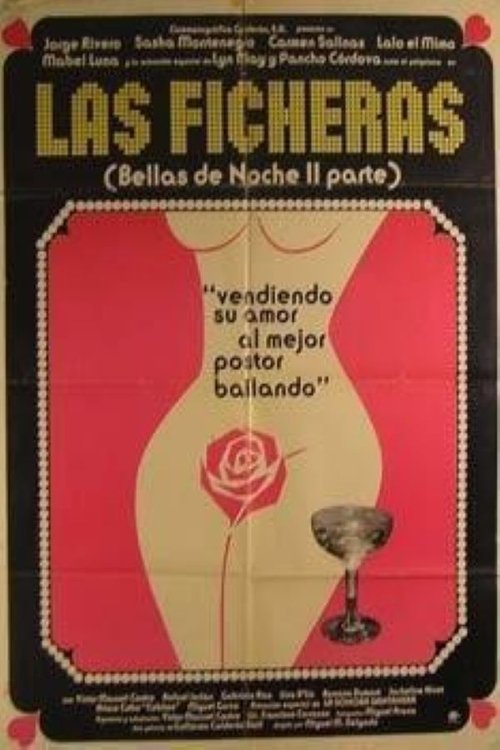
Las ficheras: Bellas de noche II
1977
No user ratings available yet
Representation score: 2.5 out of 10

Representation Score
Limited
1975
Director
Miguel M. Delgado
Runtime
98 minutes
Average Rating
No ratings yetNew Showbiz Analysis
Bellas De Noche is a traditional Mexican melodrama reflecting the social norms of its time. The plot depends on established social hierarchies and comedic conflicts driven by male characters and situational ethics. While the film provides culturally specific representation through its Mexican setting and cast, it lacks the complexity found in more inclusive cinema. The narrative structure favors conventional romantic dynamics and traditional gender roles. Ultimately, the film serves as a period piece that highlights the social conventions of 1975, focusing on individual morality and urban underworld clichés without challenging systemic power structures.
Category Breakdown
The film does not include any LGBTQ+ characters or non-straight relationships. The story revolves around a typical romance between Bronco and Carmen, following traditional romantic storylines.
Female characters such as Carmen and Lupita are portrayed within traditional roles. Although Lupita takes initiative and plays a significant role, she is still part of a male-driven plot, reinforcing gender hierarchies.
Set in Mexico, the film showcases local Mexican culture. However, it focuses on specific urban social groups rather than a wide range of diverse backgrounds.
The story employs classic melodrama elements like gambling and underworld figures. It emphasizes individual morality without addressing broader social or cultural issues.
No visible or hidden disabilities are shown. None of the characters have neurodivergent or physical disabilities.
Present on Screen
Limited or Absent
Official Synopsis
The Boxer Germán Bronco Torres loses his license, and works as bouncer at the cabaret El Pirulí, where he falls for the fichera Carmen, and befriends of the pimp Margarito Fuensanta El Vaselinas, who lost a bet and has to pay to a gangsters. For 500 pesos for El Vaselinas, Bronco prepares a trap in the cabaret to the taxi driver Raul, to seduce his girlfriend, not knowing that the victim is his own sister Lupita.
1977

1997

1973
1951
1989
1973
1958

1972
No reviews yet. Be the first to share your thoughts on this movie!
Use the rating form above to leave a star rating and optional review.