
All at Sea
1929
No user ratings available yet
Representation score: 1.1 out of 10
Representation Score
Minimal
1928
PassedDirector
Henry Lehrman
Runtime
60 minutes
Average Rating
No ratings yetNew Showbiz Analysis
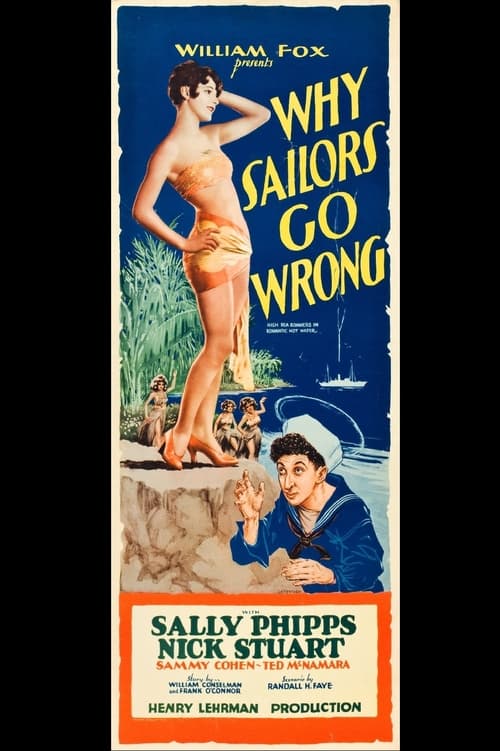
Why Sailors Go Wrong is a product of its historical era, functioning within the conventional social and narrative structures of 1920s American cinema. It prioritizes physical humor and situational absurdity over complex social deconstruction. The film lacks the intentionality required to disrupt traditional formulas or provide meaningful multi-layered representation. It follows the standard comedic structures of the early 20th century. Overall, the work reflects the homogeneous and narrow focus on straight relationships of the silent comedy era, offering little in the way of systemic narrative subversion.
Category Breakdown
The film does not include visible LGBTQ+ representation or roles. It adheres to the straight-centered conventions typical of 1928 silent comedies.
Female characters likely occupy traditional comedic roles. While they may have physical energy, the film does not challenge established gender hierarchies.
The production reflects the homogeneous casting standards of early American cinema. There is no evidence of diverse racial or ethnic representation.
The narrative reinforces contemporary social norms rather than critiquing them. It operates within a framework of traditional morality and conventional structures.
There is no evidence of characters with disabilities. The film does not use disability as a central plot device.
Present on Screen
Limited or Absent
Official Synopsis
Why Sailors Go Wrong is a 1928 American silent comedy film directed by Henry Lehrman and written by Randall Faye and Delos Sutherland.
1929
1929

1926
1926
1924
1938
1919
1933
No reviews yet. Be the first to share your thoughts on this movie!
Use the rating form above to leave a star rating and optional review.