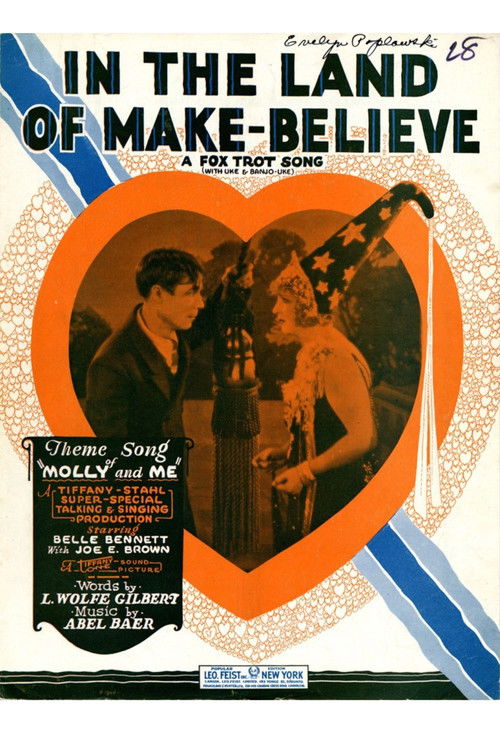
Molly and Me
1929
No user ratings available yet
Representation score: 0.0 out of 10
Representation Score
Minimal
1926
PassedDirector
Albert Ray
Runtime
60 minutes
Average Rating
No ratings yetNew Showbiz Analysis
More Pay - Less Work is a conventional silent-era comedy that relies heavily on the standard social hierarchies and romantic clichés of the 1920s. The plot is driven by a rivalry between wealthy shipping magnates, reinforcing the era's existing class structures. The film lacks meaningful representation of diverse identities. Its focus remains on a homogeneous, Western industrialist class, offering little insight into various racial, ethnic, or LGBTQ+ perspectives. Ultimately, the work serves as light entertainment rather than a vehicle for social critique. It adheres to the period's traditional gender dynamics and assumptions about relationships, providing a narrow view of the social landscape.
Category Breakdown
The film follows a traditional romantic storyline focused on the children of rival magnates. There is no depiction of non-traditional gender identities or challenges to the assumption that everyone is straight or cisgender.
The narrative centers on a comedic rivalry between male shipping magnates. Mary Brian plays a central role, but her involvement seems tied to resolving the romantic tension between the male heirs.
The story revolves around a conflict between San Francisco shipping magnates. The setting highlights a period-typical focus on a homogeneous, Western industrialist class without diverse ethnic viewpoints.
The premise centers on capitalist competition and class-based conflict. The film operates within the standard social structures of the 1920s, without critiquing Western institutions or traditional family units.
There is no evidence of characters with visible or invisible disabilities within the narrative.
Present on Screen
Limited or Absent
Official Synopsis
Albert Gran and E.J. Ratcliffe are warring San Francisco shipping magnates; Mary Brian is Gran’s daughter and Charles (Buddy) Rogers is Ratcliffe’s athletic son. The result is a swift, exhilarating comedy, full of laughs and a nonchalant charm.
1929
1926
1926
1927
1929

1928
1924

1928
No reviews yet. Be the first to share your thoughts on this movie!
Use the rating form above to leave a star rating and optional review.