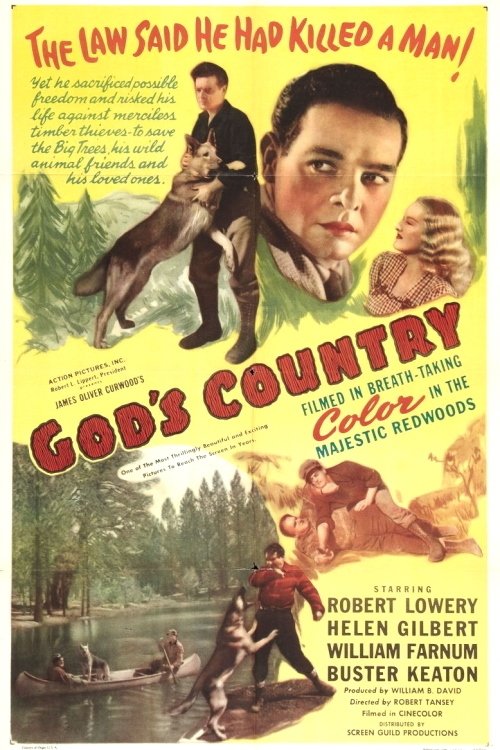
God's Country
1946
No user ratings available yet
Representation score: 0.9 out of 10
Representation Score
Minimal
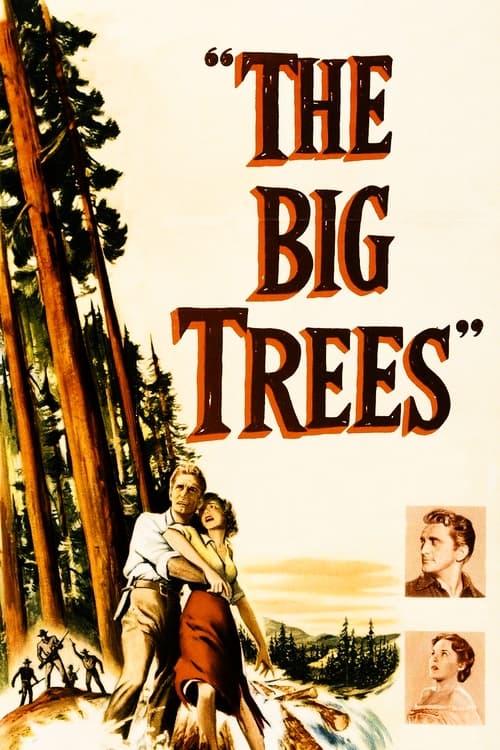
1952
NRDirector
Felix E. Feist
Runtime
89 minutes
Average Rating
No ratings yetNew Showbiz Analysis
The Big Trees is a conventional mid-century drama that emphasizes traditional moral conflicts over progressive representation. The narrative structure centers on a male-driven struggle for industrial dominance, offering limited space for diverse perspectives. While the film critiques industrial exploitation, it does so through a narrow demographic lens. The focus remains on the clash between a timber baron and a religious community, reinforcing the social hierarchies of the 1950s. Ultimately, the film serves as a standard moral drama of its time. It lacks the depth and character variety needed to transcend the demographic conventions of the early 20th century.
Category Breakdown
The film does not include any LGBTQ+ characters or non-straight relationships. It follows traditional romantic and social themes typical of the 1950s.
The story is driven by a male perspective focused on industrial competition and resource acquisition. The central conflict revolves around a male protagonist's struggle against rival industry leaders.
The narrative probably centers on a predominantly white population within the California Quaker colony. It avoids exploring racial or ethnic diversity, focusing instead on ideological conflicts.
The story critiques unbridled capitalism through the tension between individual greed and communal ethics. It relies on a traditional moral framework centered on the Quaker colony.
There is no mention of characters with physical or neurodivergent disabilities. Such elements do not appear as central character arcs or plot devices.
Present on Screen
Limited or Absent
Official Synopsis
In 1900, unscrupulous timber baron Jim Fallon plans to take advantage of a new law and make millions off California redwood. Much of the land he hopes to grab has been homesteaded by a Quaker colony, who try to persuade him to spare the giant sequoias...but these are the very trees he wants most. Expert at manipulating others, Fallon finds that other sharks are at his own heels, and forms an unlikely alliance.
1946
1940
1939
1954
1948
1964
1938
1963
No reviews yet. Be the first to share your thoughts on this movie!
Use the rating form above to leave a star rating and optional review.