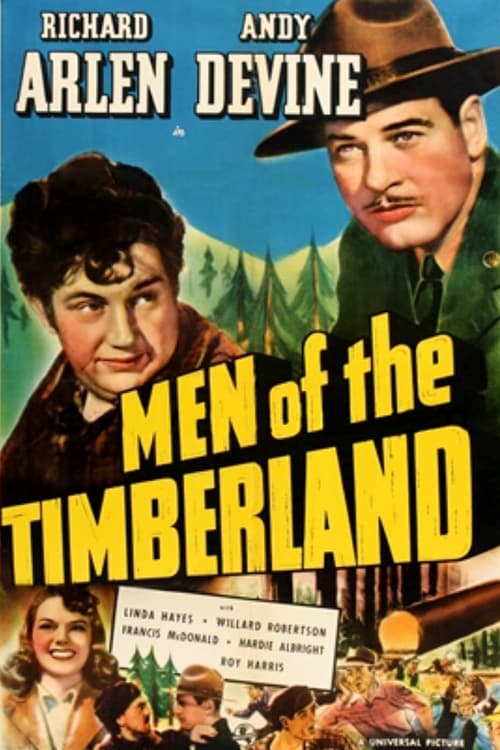
Men of the Timberland
1941
No user ratings available yet
Representation score: 0.5 out of 10
Representation Score
Minimal
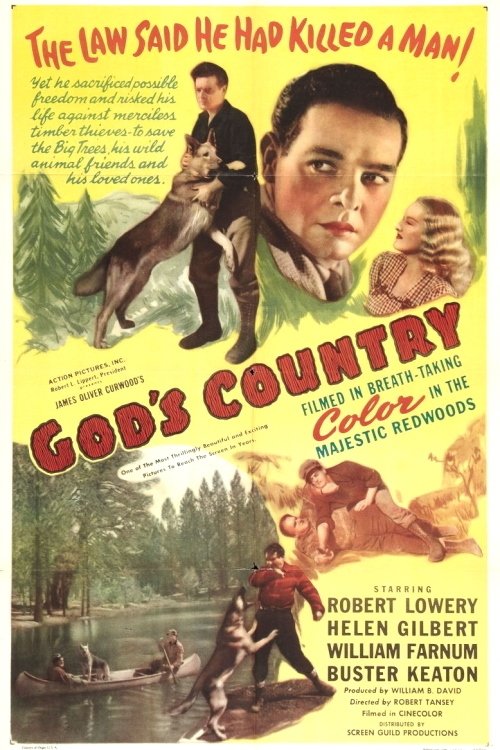
1946
ApprovedDirector
Robert Emmett Tansey
Runtime
64 minutes
Average Rating
No ratings yetNew Showbiz Analysis
God's Country is a classic 1940s B-Western that emphasizes genre clichés over social complexity. The narrative centers on a straightforward journey of a male protagonist navigating personal freedom versus community duty. The film reinforces the social and cultural norms of its time. It lacks depth in representing diverse identities, presenting a world dominated by traditional masculine roles and Anglo-Saxon narratives without challenging the status quo. Ultimately, the film operates as a conventional genre piece. It adheres to established cinematic language rather than disrupting conventional expectations about race, gender, or institutional authority.
Category Breakdown
The film follows traditional heterosexual and cisgender norms. There are no non-cisgender gender identities or same-sex relationships portrayed.
Gender roles remain traditional throughout the film. Lynn O'Malley serves as a catalyst for the plot but has limited influence compared to the male protagonist.
The cast appears uniform, reflecting the era's typical B-Western stereotypes. There are no characters of color with significant roles or ability to act.
The story adheres to a standard Western morality framework. It explores conflicts between local trappers and timber barons but upholds the existing social and legal order.
There are no characters with visible or invisible disabilities. The film does not use disability as a plot device or for mockery.
Present on Screen
Limited or Absent
Official Synopsis
Lee Preston, aka Leland Bruce, kills a man in self defense but flees to the redwood country when the law makes it a murder charge. There he meets Lynn O'Malley, the niece of Sandy McTavish who runs the trading post. Lee learns the reason why this is good trapping country is because the timber barons across the lake are ruthlessly cutting the trees and driving the animals across the river. The trappers appeal to him to take a petition to the Governor which would prohibit the timber people from coming to their side of the lake. At first, because he is a wanted man, he refuses but does so later for the sake of the people even though he knows it will lead to his arrest.
1941
1940
1973

1939
1952
1959
1945
1943
No reviews yet. Be the first to share your thoughts on this movie!
Use the rating form above to leave a star rating and optional review.