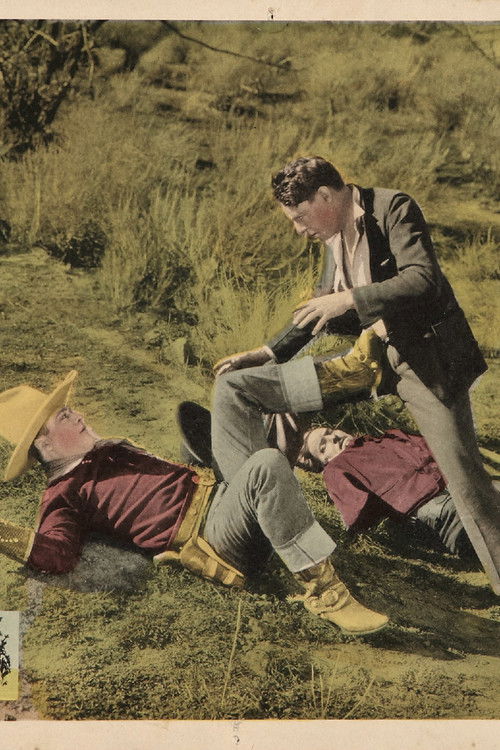
The Escape
1926
No user ratings available yet
Representation score: 1.3 out of 10
Representation Score
Minimal
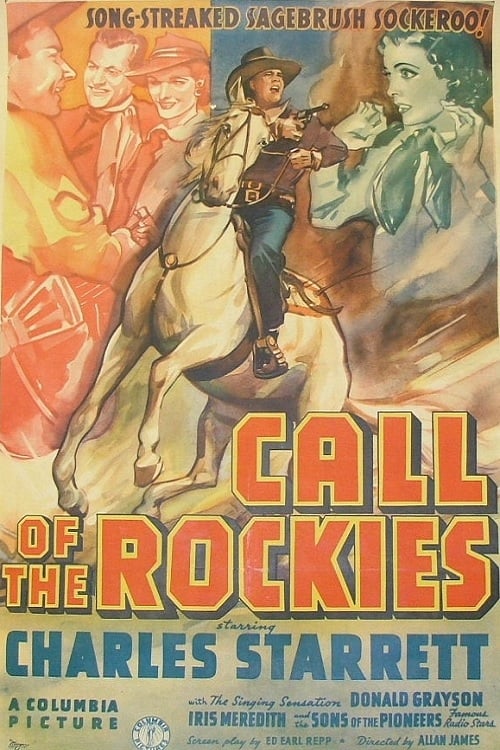
1938
ApprovedDirector
Alan James
Runtime
54 minutes
Average Rating
No ratings yetNew Showbiz Analysis
Call of the Rockies is a quintessential 1930s B-Western that prioritizes genre clichés over social complexity. The story centers on a struggle for land ownership, utilizing a standard moral dichotomy between a righteous hero and a crooked antagonist. While the film provides a female lead with property, her role is largely defined by her financial instability. This setup positions her as a catalyst for male heroism rather than an independent agent of resolution. The production adheres to the era's homogeneous casting and narrow focus on straight relationships. It functions as a traditionalist piece that reinforces established social hierarchies and Western archetypes.
Category Breakdown
The film follows a traditional Western structure focused on land disputes. There is no indication of non-straight or non-cisgender identities or same-sex relationships within the narrative.
Ann Bradford plays a significant role as a ranch owner, yet her financial vulnerability requires male intervention. The plot relies on masculine confrontation to drive the resolution.
The story focuses on a conflict between white characters. The narrative structure reflects the era's standard of white-centric storytelling without evidence of diverse casting.
The film reinforces traditional Western values regarding property rights and individual justice. It validates the restoration of order through masculine strength and private enterprise.
The narrative provides no information regarding characters with physical or mental disabilities.
Present on Screen
Limited or Absent
Official Synopsis
Unable to pay her notes, Ann Bradford, owner of the Circle C, decides to auction off a half-interest in her ranch. Matt Stark, a crooked land dealer, holds Ann's notes. His efforts to buy the ranch have been refused and his instructs his henchman, Barlow, and his other henchmen to make certain that nobody bids on the ranch. Clint Buckley rides into town on the day of the auction, overhears Stark's instructions to his henchies, and decides to attend the sale. Barlow attempts to intimidate him, they fight, Buckley wins and his bid of $25,000 wins him a half-interest in the Circle C. But, Stark, isn't finished yet in his efforts to get the ranch, especially since a couple of his hirelings are on the Circle C payroll.
1926
1940
1929
1927

1942
1936
1927
1938
No reviews yet. Be the first to share your thoughts on this movie!
Use the rating form above to leave a star rating and optional review.