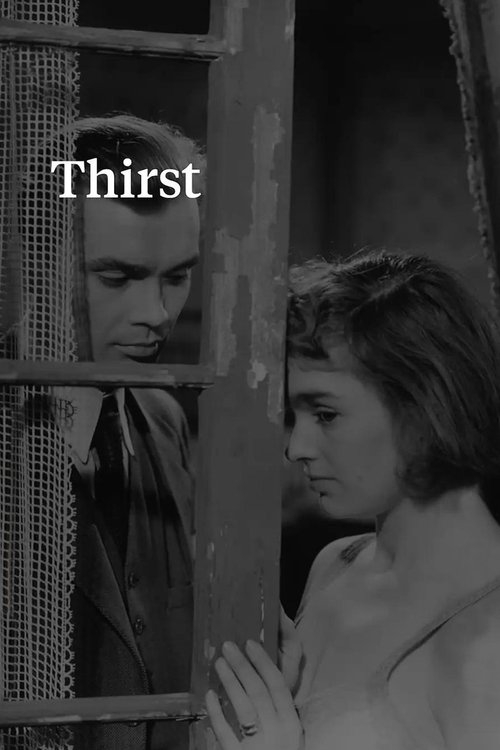
Thirst
1949
No user ratings available yet
Diversity score: 4.7 out of 10

1984
Director
Ingmar Bergman
Runtime
70 minutes
Average Rating
No ratings yetSynopsis
Rational, exacting, and self-controlled theater director, Henrik Vogler, often stays after rehearsal to think and plan. On this day, Anna comes back, ostensibly looking for a bracelet. She is the lead in his new production of Strindberg's A Dream Play. She talks of her hatred for her mother, now dead, an alcoholic actress, who was Vogler's star and lover.
Overall Score
Fair
Category Breakdown
LGBTQ+ Representation
The film explores complex intimacy and the psychological fallout of past romantic entanglements. However, it remains within a traditional heterosexual framework and does not center non-cisnormative identities.
Gender Representation
The narrative disrupts conventional hierarchies by centering female agency and psychological depth. Anna serves as a driving force whose emotional history dictates the film's central tension.
Racial & Ethnic Diversity
The production maintains a homogeneous cast set within a specific Swedish theatrical context. There is no evidence of diverse ethnic backgrounds or intentional color-blind casting.
Religious & Cultural Diversity
The film deconstructs social structures by favoring subjective morality over religious dogma. It treats identity as a fluid, performative construct rather than something fixed by societal mandates.
Disability Representation
Mental health struggles and psychological fragmentation are explored as existential conditions. The film lacks specific depictions of neurodivergence or physical disabilities.
Strengths
Areas for Improvement
AI Analysis
Bergman’s work excels at subverting gendered power dynamics by prioritizing the internal landscapes of its female characters. The film moves away from male-driven plots to focus on the intellectual and emotional depth of women. However, the film's intersectional impact is constrained by its homogeneous casting. The narrative is deeply rooted in a specific, intellectualized European milieu that lacks racial and ethnic variety. While the film offers a sophisticated postmodern critique of identity and social order, it lacks representation for LGBTQ+ identities and physical disabilities, remaining focused on traditional psychological themes.
1949

1958

1980

1972
1963

1976

1961
1949

1963

2000

1948

1992
No reviews yet. Be the first to share your thoughts on this movie!
Use the rating form above to leave a star rating and optional review.