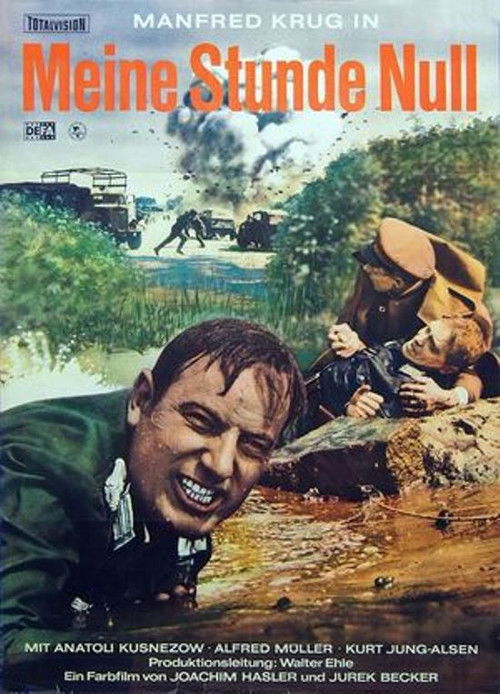
My Zero Hour
1970
No user ratings available yet
Representation score: 2.4 out of 10
Representation Score
Fair
1967
Director
Hansjürgen Pohland
Runtime
88 minutes
Average Rating
No ratings yetNew Showbiz Analysis
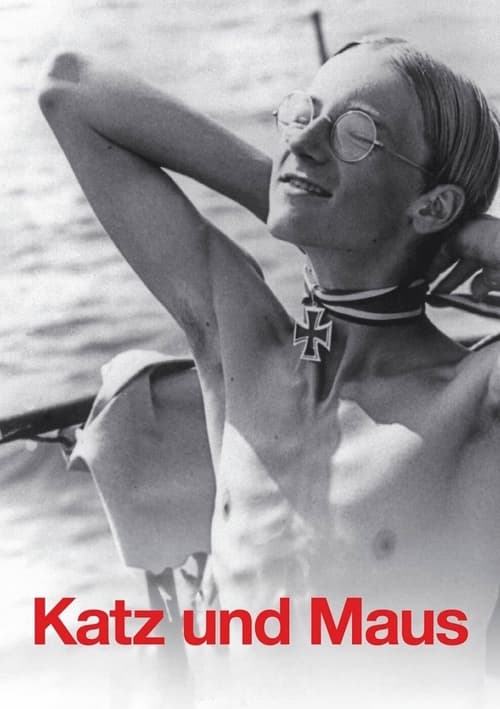
Hansjürgen Pohland’s work functions as a sophisticated psychological study that challenges traditional war movie expectations. Instead of glorifying military achievements, the film examines how institutions categorize and discard individuals. The narrative's strength lies in its critique of authority and its exploration of social alienation. However, the film remains limited by its narrow demographic focus and lack of diverse gender or sexual identities. Ultimately, the film exposes the corruption of rigid social structures through a single character's social rise and fall.
Category Breakdown
The film focuses on male peer conflicts and wartime trauma. There is no evidence of non-straight or non-cisgender identities or same-sex relationships.
The story centers on male-dominated spaces such as schools and the military. It lacks significant roles for women or the subversion of traditional gender roles.
The story reflects the homogeneous demographic of its historical setting in Danzig. It focuses on the German experience without any non-white representation.
The film excels at critiquing Western institutions like the military and education. It deconstructs nationalistic pride through the protagonist's journey.
An oversized Adam’s apple serves as a catalyst for social exclusion. The film explores how physical differences drive psychological struggles.
Present on Screen
Limited or Absent
Official Synopsis
In 1966, a former gymnast returns to his hometown Danzig, which is now a part of Poland. He begins to reflect on one of his classmates, Joachim Mahlke, who disappeared during World War II. Mahlke was initially marked as an outsider due to his oversized Adam’s apple, but when he turned out to be a great diver, the in-crowd embraced him. Then he steals a Knight’s Cross from a soldier and is expelled from school. Volunteering for war service, he earns a medal himself and hopes his reputation will be rehabilitated. But the school principal refuses and Mahlke deserts from the army…
1970

2002

1978
1959

1957
1962
1964
1982
No reviews yet. Be the first to share your thoughts on this movie!
Use the rating form above to leave a star rating and optional review.