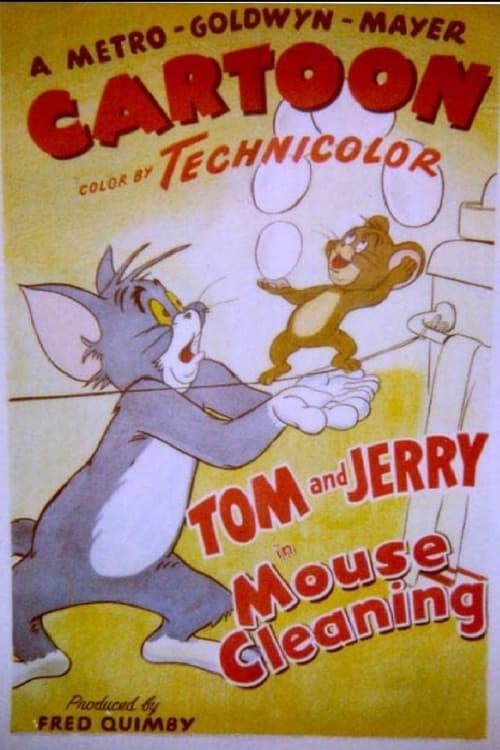
Mouse Cleaning
1948
No user ratings available yet
Representation score: 0.3 out of 10
Representation Score
Minimal
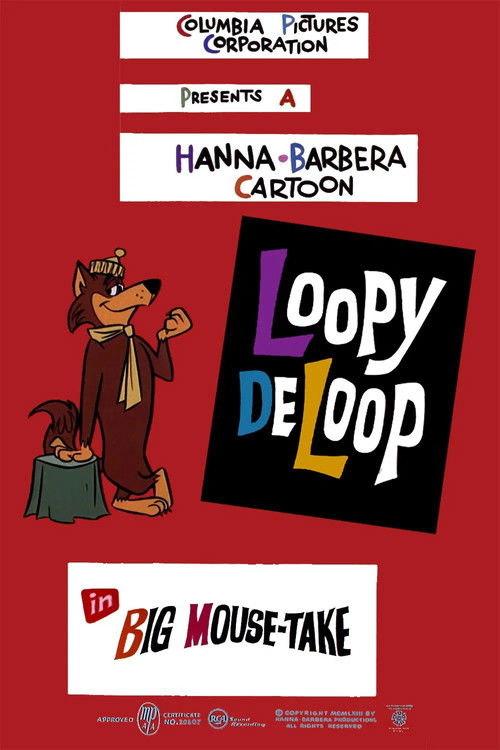
1965
ApprovedDirector
William Hanna, Joseph Barbera
Runtime
7 minutes
Average Rating
No ratings yetNew Showbiz Analysis
Big Mouse-Take follows a traditional mid-century comedic structure centered on domestic stability and transactional conflict. The plot focuses on Loopy's attempt to protect Chaterly's housing security by resolving a dispute with Bigelow Mouse. Since the story relies on established hierarchies of owners and workers, it lacks the complexity and systemic critique found in more progressive animation. The characters function within a rigid, functional domestic system rather than challenging social norms. Ultimately, the film serves as a standard example of character-driven slapstick that prioritizes maintaining the status quo over diverse representation.
Category Breakdown
The film does not include any characters with non-binary gender identities or same-sex relationships. The plot focuses solely on a domestic conflict between animal characters.
The story revolves around traditional gender roles and domestic hierarchies. It does not challenge or subvert these roles or the status quo.
The plot centers on anthropomorphic animals without any indication of racial or ethnic diversity. Species are not used as metaphors for underrepresented identities.
The narrative emphasizes maintaining established order and domestic stability. It lacks any critique of Western institutions or secularism, focusing instead on functional systems.
There is no mention of characters with visible or invisible disabilities. The film does not provide any indication of neurodivergent representation or ability to act.
Present on Screen
Limited or Absent
Official Synopsis
Loopy agrees to help in getting rid of Bigelow Mouse, or otherwise Chaterly's owner will throw Chaterly out of the house for not doing his job as a cat.
1948

1957
1965
1940
1951
1954
1965
1944
No reviews yet. Be the first to share your thoughts on this movie!
Use the rating form above to leave a star rating and optional review.