
Bombay to Goa
1972
No user ratings available yet
Representation score: 4.7 out of 10
Representation Score
Minimal
1971
Director
Nasir Hussain
Runtime
154 minutes
Average Rating
No ratings yetNew Showbiz Analysis
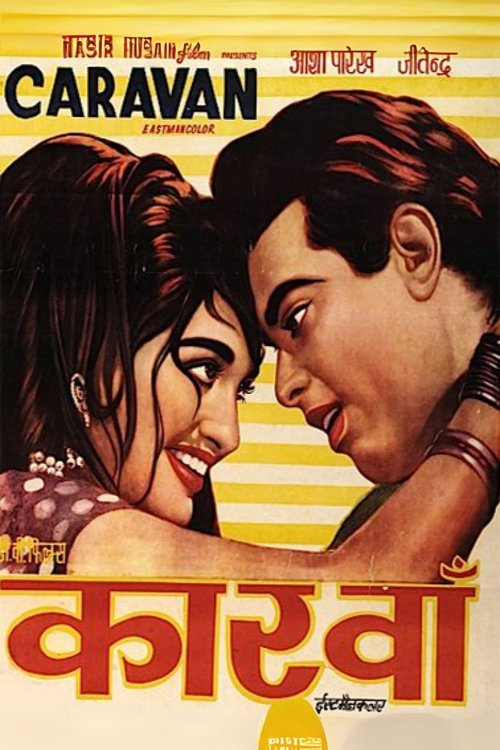
Caravan is a classic example of 1970s masala cinema, prioritizing escapism and musical adventure over social critique. While the film offers a vibrant aesthetic through its desert and nomadic settings, it primarily reinforces the era's established social norms. The narrative relies heavily on traditional gender hierarchies and straight-centered romantic clichés. While the female lead demonstrates some independence, her journey is largely defined by male pursuit and romantic competition. Ultimately, the film serves as a genre-driven entertainment piece. It lacks the intentionality needed to challenge systemic power dynamics or provide nuanced, characters who reflect more than one aspect of diversity of diverse identities.
Category Breakdown
The film focuses solely on heterosexual relationships and does not depict non-binary gender identities or challenge traditional relationship structures.
Sunita takes control by escaping a harmful marriage, but her journey remains reactive to male-driven conflicts. Female characters mainly serve as emotional catalysts or objects of pursuit.
The nomadic setting and gypsy groups provide a visually diverse backdrop. However, these elements serve the adventure genre rather than offering deeper representation of diverse identities.
The story adheres to traditional moral frameworks of 1970s commercial cinema, emphasizing romantic loyalty and social ideals over subversive narratives.
There are no visible or invisible disabilities portrayed as central to the character arcs or used as significant plot devices.
Present on Screen
Limited or Absent
Official Synopsis
Sunita is a young woman who ends up married to the wrong man, Rajan. Thinking that he has conspired with his girlfriend, Monica to murder her, she runs away to find an old friend of her father's in Bangalore who may be able to help. Having no money, the only way she can get there is to join a traveling caravan. The crew of the caravan is Mohan, Mohan's sidekick Johnny, and Mohan's younger brother Monto. Along the way, the caravan crosses paths with a group of gypsies that includes some causal young men. Sunita soon falls in love with Mohan but Nisha is attracted to Mohan and this puts Sunita in danger again to make matters worse Rajan has conducted a manhunt to find Sunita either by hook or by crook.
1972
1959

1946

2006

1960
1985
1991

2015
No reviews yet. Be the first to share your thoughts on this movie!
Use the rating form above to leave a star rating and optional review.