Find another title
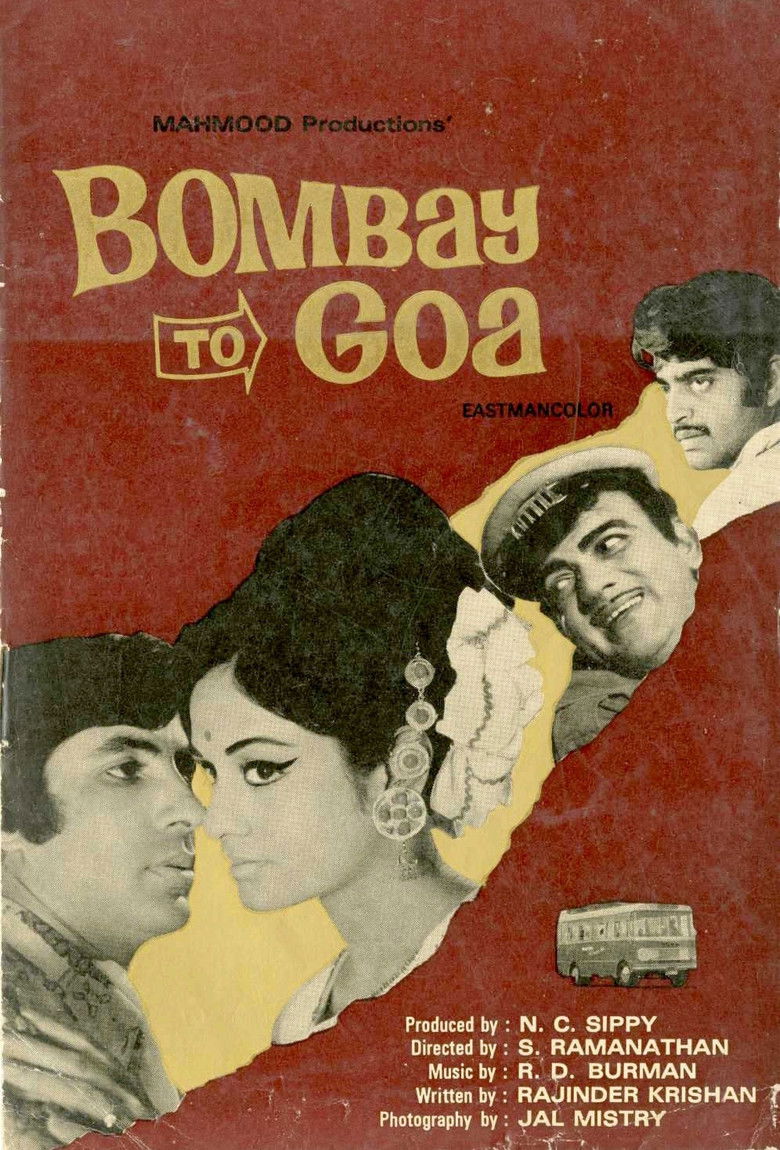
Bombay to Goa
1972
Director
S. Ramanathan
Runtime
137 minutes
Average Rating
No ratings yetSynopsis
The lives of Atmaram and his wife are turned upside down when they see their daughter, Mala's pictures in a magazine. They arrange for Mala's marriage with the son of Ramlal. Mala is opposed to marrying anyone who she has not met, and is at the same time thrilled that the two persons she trusted, one Sharma, and the other Verma had actually submitted her pictures to a magazine, and were now willing to sign her up for a Bollywood movie. Mala is not able to understand her parents' opposition on her way to fame, and runs away from home with a lot of money to Goa.
Where to Watch
Diversity & Representation
Overall Score
Limited
Category Breakdown
LGBTQ+ Representation
The film adheres to heteronormative romantic frameworks typical of 1970s mainstream cinema. It focuses on traditional courtship, with no discernible queer narratives or non-cisnormative identities present.
Gender Representation
Gender hierarchies remain traditional throughout the journey. While Mala shows agency by fleeing a crime, the plot is driven by male characters and conventional romantic pursuit.
Racial & Ethnic Diversity
The cast is ethnically homogeneous, reflecting its Indian origin. However, the ensemble provides a rich tapestry of regional and socioeconomic identities across the subcontinent.
Religious & Cultural Diversity
Values align with traditional social structures, prioritizing musicality and romance. The film uses social spaces as backdrops for tension rather than critiquing established institutions.
Disability Representation
The narrative focuses on an able-bodied ensemble. There is no evidence of characters with disabilities being afforded complex arcs or meaningful agency.
Strengths
- The ensemble cast provides a diverse tapestry of regional and socioeconomic identities within India.
- The transit-based structure effectively brings together characters from various cultural backgrounds.
Areas for Improvement
- The film lacks representation for LGBTQ+ identities and non-cisnormative gender expressions.
- Gender roles remain traditional, with male characters driving the kinetic energy of the plot.
- There is no significant presence or agency afforded to characters with disabilities.
AI Analysis
Bombay to Goa is a product of its era, functioning as a musical travelogue that prioritizes entertainment and romantic archetypes. Its strength lies in its ability to present a broad cross-section of Indian socioeconomic life through its ensemble cast. However, the film lacks intentional subversion of social hierarchies. It relies on traditional gender roles and heteronormative storytelling, offering little representation for LGBTQ+ identities or individuals with disabilities. Ultimately, while the film succeeds in depicting a diverse range of regional identities, it remains rooted in the conservative social frameworks of 1970s mainstream cinema.
Rate this Movie
Reviews
No reviews yet. Be the first to share your thoughts on this movie!
Use the rating form above to leave a star rating and optional review.