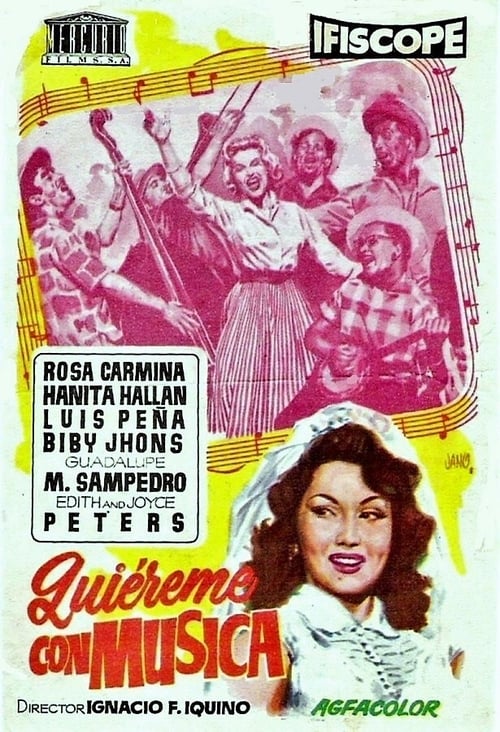
Quiéreme con música
1957
No user ratings available yet
Representation score: 2.5 out of 10

Representation Score
Limited
1979
Director
Julio Saraceni
Runtime
90 minutes
Average Rating
No ratings yetNew Showbiz Analysis
Alejandra, mon amour is a traditional piece of Spanish commercial entertainment from the late 1970s. It emphasizes genre-standard clichés and lighthearted musical comedy over challenging social hierarchies. The film’s structure aligns with the cultural norms of the time, relying on established domestic archetypes and traditional storytelling. It offers little in the way of identity-based subversion. Ultimately, the work reflects mainstream Mediterranean values rather than promoting diverse or progressive representation.
Category Breakdown
The film follows traditional heterosexual romantic storylines typical of 1970s musical comedies. There is no indication of characters with non-traditional gender identities or stories that question traditional sexual orientations.
Female characters likely play traditional romantic or performance roles. They may have significant screen time but do not challenge gender hierarchies or male dominance.
The cast includes established Spanish actors, reflecting a focus on domestic cultural types. This suggests a homogeneous demographic consistent with the era's commercial standards.
The production upholds conventional social norms and traditional Mediterranean identities. It lacks secular or anti-institutional elements needed to challenge the cultural status quo.
There is no information about characters with visible or invisible disabilities in the cast or narrative.
Present on Screen
Limited or Absent
1957
1975
1969

1968
1978
1958

1973
1955
No reviews yet. Be the first to share your thoughts on this movie!
Use the rating form above to leave a star rating and optional review.