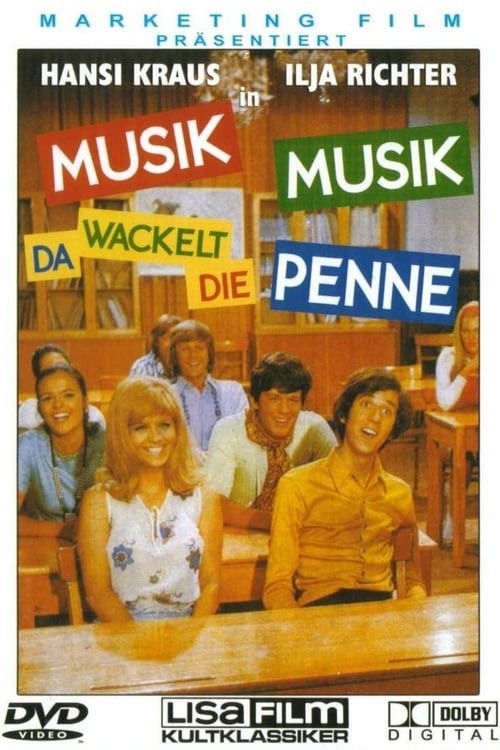
Musik, Musik - da wackelt die Penne
1970
No user ratings available yet
Representation score: 1.8 out of 10
Representation Score
Limited
1970
Director
Franz Josef Gottlieb
Runtime
95 minutes
Average Rating
No ratings yetNew Showbiz Analysis
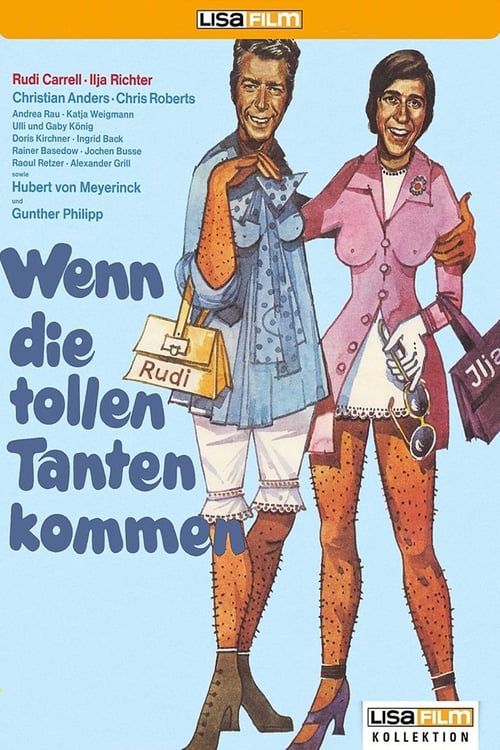
When the Mad Aunts Arrive is a period-specific European farce that finds its progressive edge through the lighthearted deconstruction of gendered roles. By using mistaken identity, the film allows male characters to inhabit female personas, momentarily destabilizing the era's strict social hierarchies. However, the film lacks deeper exploration of identity. Its reliance on cross-dressing as a comedic device rather than a character-driven exploration of identity limits its impact. The demographic presentation remains largely homogeneous, reflecting the era's mainstream commercial standards. Ultimately, the work serves as an example of how mainstream comedy experimented with social identity fluidity through situational chaos rather than intentional, systemic representation.
Category Breakdown
The film centers on cross-dressing and gender-bending as its main comedic elements. Although it doesn't explicitly explore queer identities, the subversion of traditional gender presentations challenges assumptions about gender.
The story disrupts traditional masculine leadership by placing male characters in feminine social roles. This temporary suspension of rigid gender hierarchies uses the 'mad aunts' persona to challenge conventional social norms.
The setting and cast reflect a homogeneous European demographic typical of 1970s German musical comedies. There is no indication of intentional racial diversity or inclusive casting practices.
The story critiques the rigid social structures of high-society resorts. The protagonists disrupt established institutional order, though the themes remain rooted in situational farce rather than a broader critique of societal systems.
There is no discernible evidence regarding the portrayal of physical or neurodivergent disabilities within the film.
Present on Screen
Limited or Absent
Official Synopsis
A young employee in a Munich travel agency takes a man friend along to Velden, a resort in which he has to settle a business matter. Through a number of misunderstandings the two men do not arrive at the resort at the expected time, nor are they registered in their own name but rather as Mrs. Himmelreich and her secretary. Disguised as these eccentric ladies they manage to turn the hotel and resort upside down in no time at all.
1970
1980
1969
1978

1979
1960

1965

1968
No reviews yet. Be the first to share your thoughts on this movie!
Use the rating form above to leave a star rating and optional review.