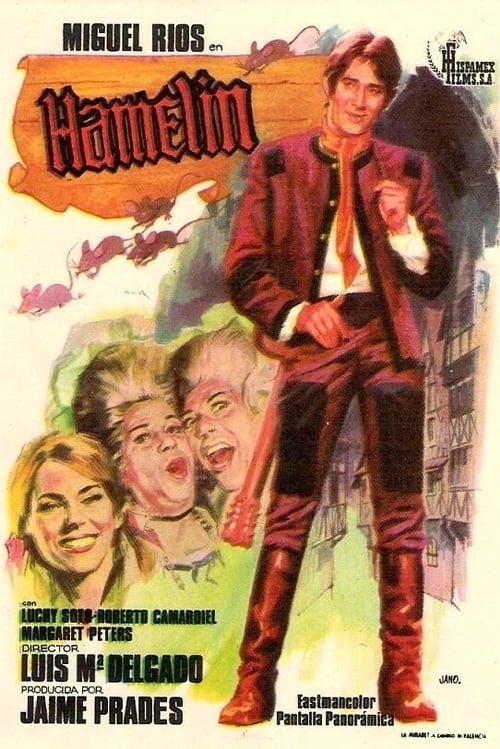
Hamelín
1969
No user ratings available yet
Representation score: 1.8 out of 10

Representation Score
Minimal
1973
Director
Juan de Orduña
Runtime
0 minutes
Average Rating
No ratings yetNew Showbiz Analysis
Me has hecho perder el juicio is a traditional musical comedy that follows the cliché of artistic ambition versus pragmatic social expectations. The story centers on Manolo's dream of becoming a singer while his friend Diego encourages more profitable paths. The film adheres to the established cinematic conventions of mid-century Spain. It emphasizes traditional narrative structures without disrupting social hierarchies or challenging cultural norms through progressive lenses. Overall, the work functions as a conventional period piece, focusing on traditional career aspirations and social dynamics without offering characters who reflect more than one aspect of diversity or narrative disruption.
Category Breakdown
The film centers on the friendship between two men and their career paths. There is no indication of LGBTQ+ identities or critiques of the assumption that everyone is straight or cisgender.
The narrative focuses on male ambition and male friendship. It seems to follow a traditional patriarchal framework typical of 1970s Spanish comedy.
The production context suggests a homogeneous demographic prevalent in 1973 Spain. There is no evidence of diverse casting or narratives that include different backgrounds.
Themes revolve around pursuing a vocation versus traditional activities like bullfighting. The conflict is centered on individual ambition rather than a critique of cultural institutions.
There is no information available regarding the depiction of neurodivergence or physical disabilities within this work.
Present on Screen
Limited or Absent
Official Synopsis
Manolo would like to be a singer, but his friend Diego tries to convince him time and again that he should devote himself to more lucrative activities, such as cinema or bullfighting.
1969
1975
1978
1957

1968

1979
1963

1955
No reviews yet. Be the first to share your thoughts on this movie!
Use the rating form above to leave a star rating and optional review.