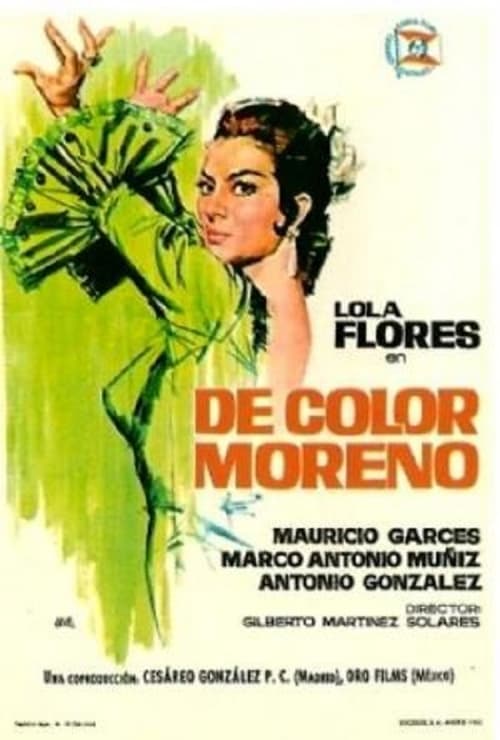
De color moreno
1963
No user ratings available yet
Representation score: 2.0 out of 10
Representation Score
Limited
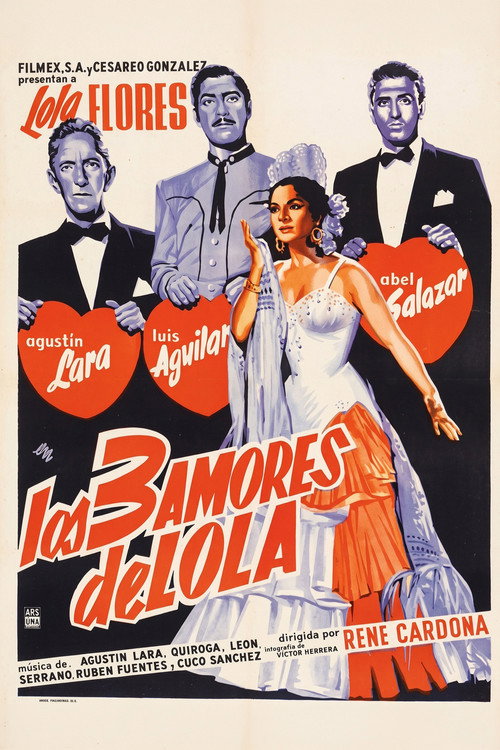
1956
Director
René Cardona
Runtime
90 minutes
Average Rating
No ratings yetNew Showbiz Analysis
Los tres amores de Lola is a period-specific musical comedy that follows the commercial conventions of the Golden Age of Mexican cinema. It centers on traditional romantic structures focused on courtship and spectacle. The film offers some representation by featuring a professional female artist, but it lacks the complexity needed to challenge social hierarchies. It remains anchored in the romantic clichés typical of 1950s commercial cinema. While culturally specific to its region, the film primarily serves as melodic escapism rather than a vehicle for systemic narrative deconstruction.
Category Breakdown
The film centers on heterosexual relationships, focusing on a female character pursued by three male suitors. There is no representation of non-straight or non-cisgender identities.
The main character is a female Flamenco dancer who has some professional autonomy. However, she is often positioned as an object of romantic pursuit rather than a driver of change.
The film features a predominantly Mexican cast, reflecting the cultural context of the time. It includes elements of Flamenco artistry, suggesting a blend of cultural influences.
The movie operates within traditional mid-20th century musical comedy frameworks. It reinforces conventional social structures and romantic hierarchies without challenging established norms.
There is no depiction of characters with visible or invisible disabilities in the narrative.
Present on Screen
Limited or Absent
Official Synopsis
Flamenco artist in Mexico draws attention from three suitors.
1963
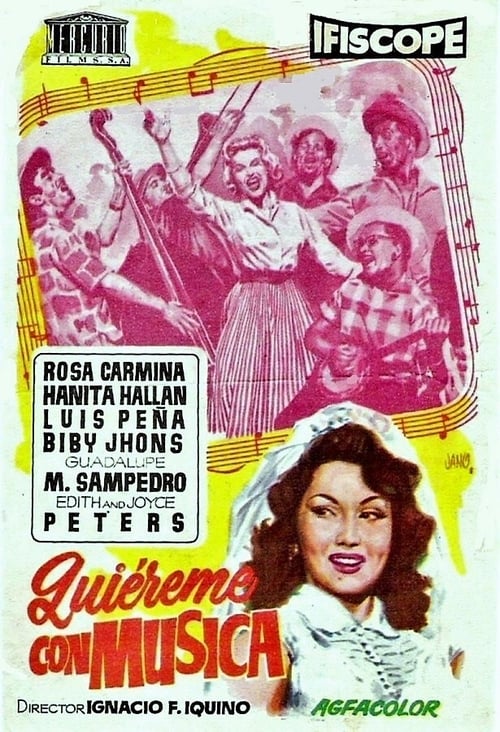
1957
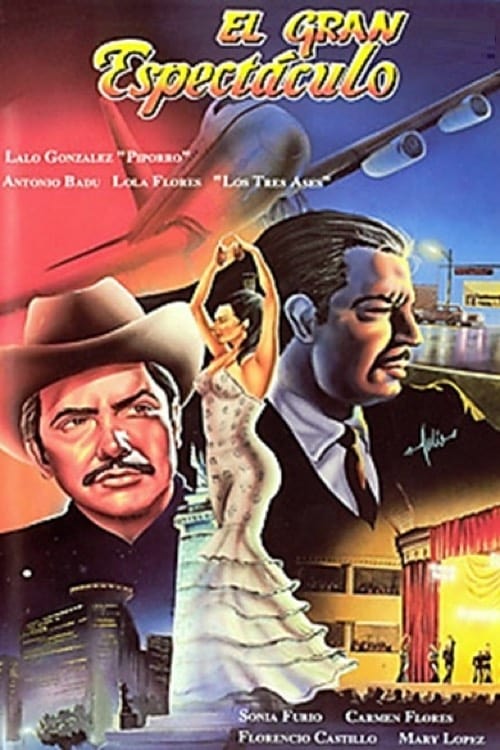
1958
1955
1949
1967
1964
1958
No reviews yet. Be the first to share your thoughts on this movie!
Use the rating form above to leave a star rating and optional review.