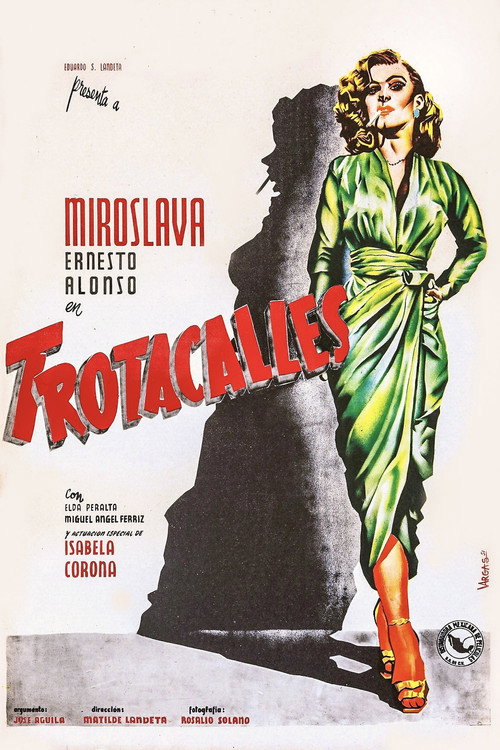
Streetwalker
1951
No user ratings available yet
Representation score: 6.4 out of 10
Representation Score
Limited
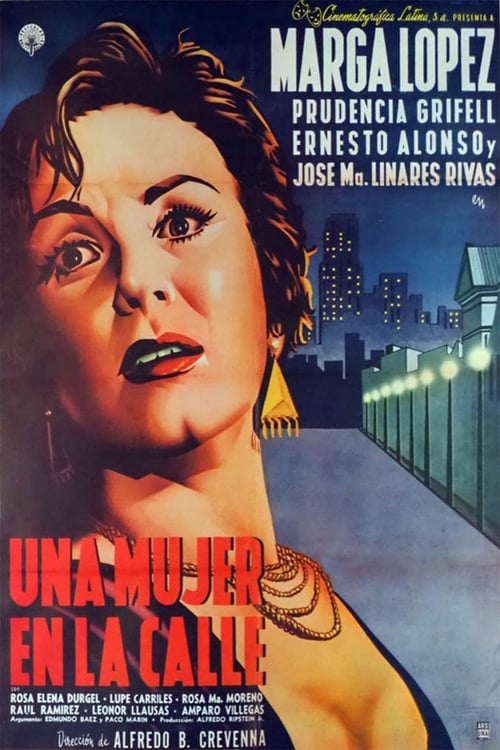
1955
Director
Alfredo B. Crevenna
Runtime
90 minutes
Average Rating
No ratings yetNew Showbiz Analysis
Una mujer en la calle is a traditional social drama that explores the tension between different social classes. While it offers visibility for women in non-traditional roles, the film adheres to the rigid narrative conventions of 1950s Mexican cinema. The film does not intentionally address overlapping identities or challenge systemic hierarchies. Instead, it focuses on class-based social stigmas and moral struggles within the era's structural frameworks. Ultimately, the work aligns with the conventions of its time, prioritizing conventional storytelling over disrupting established social or sexual norms.
Category Breakdown
The film does not depict non-binary genders or same-sex relationships. Its focus is on class dynamics rather than sexual orientation.
The story centers on female experiences across various social roles. However, it may adhere to mid-century moral standards without challenging patriarchal structures.
As a Mexican production, the film showcases a non-Anglo-Saxon cast reflecting local demographics. It avoids using race to disrupt social norms.
The plot examines class differences through a underrepresented worker and an aristocrat. It follows traditional moral frameworks without anti-institutional themes.
There is no depiction of characters dealing with physical or neurodivergent disabilities.
Present on Screen
Limited or Absent
Official Synopsis
An unlikely friendship develops when respectable Doña Nena spends her days looking out her window across the street to the sex workers who spend their nights there. One night, she helps helps Alicia one of the girls, escape a police raid and spend several nights painting her portrait.
1951
1931
1960

1949

1951
1970
1952

1964
No reviews yet. Be the first to share your thoughts on this movie!
Use the rating form above to leave a star rating and optional review.