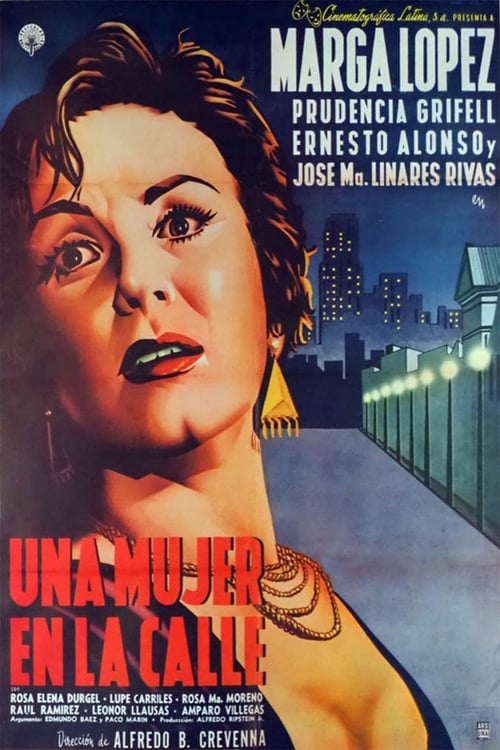
Una mujer en la calle
1955
No user ratings available yet
Diversity score: 3.8 out of 10

1952
Director
René Cardona
Runtime
93 minutes
Average Rating
No ratings yetSynopsis
Working-class girl-next--door type is seduced into a high-glam lifestyle when an oily promoter helps launch her as a nightclub singer; she throws over her decent-simple-guy boyfriend and loses her moral compass.
Overall Score
Limited
Category Breakdown
LGBTQ+ Representation
The film operates on a strictly heteronormative foundation. There is no presence of non-cisnormative identities or same-sex intimacy within the narrative.
Gender Representation
The story relies on the 'fallen woman' trope to reinforce traditional hierarchies. It focuses on the moral consequences of female transgression rather than female agency.
Racial & Ethnic Diversity
The cast is primarily Mestizo, reflecting the demographic reality of mid-century Mexico. It maintains cultural authenticity by representing the local working and middle classes.
Religious & Cultural Diversity
The narrative functions as a vehicle for traditional morality and religious conservatism. It views the disruption of social norms as a moral failure.
Disability Representation
There is no discernible focus on visible or invisible disabilities in this production.
Strengths
Areas for Improvement
AI Analysis
Por qué peca la mujer is a quintessential mid-century melodrama that prioritizes social and moral stability over progressive representation. The film uses its protagonist's descent into a glamorous lifestyle as a cautionary tale, effectively penalizing female autonomy to uphold traditional values. While the film succeeds in providing a culturally authentic Mexican setting through its Mestizo casting, it fails to offer any intersectional nuance. The narrative architecture is designed to reinforce established hierarchies rather than challenge them. Ultimately, the work serves as a conservative reflection of 1950s social frameworks, focusing on the judgment of female 'sin' rather than systemic critique or diverse identity exploration.
1955
1953

1991
1956

1957
1953

1953
1953
1957

1947
1952

1949
No reviews yet. Be the first to share your thoughts on this movie!
Use the rating form above to leave a star rating and optional review.