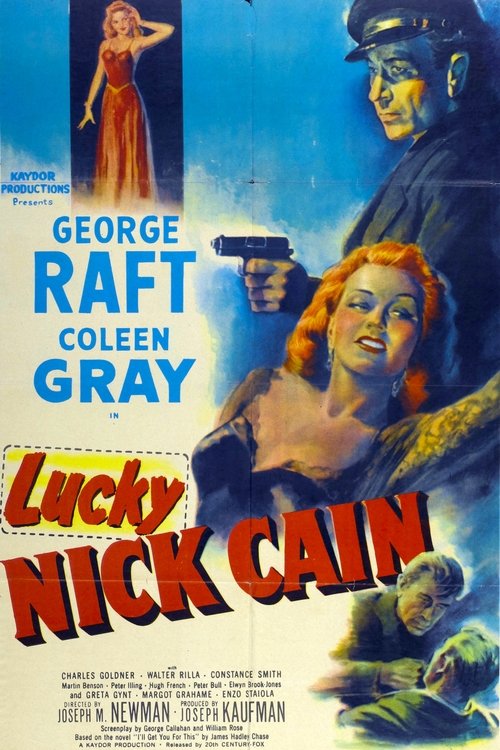
I'll Get You for This
1951
No user ratings available yet
Representation score: 0.8 out of 10
Representation Score
Minimal
1953
NRDirector
Richard Vernon
Runtime
84 minutes
Average Rating
No ratings yetNew Showbiz Analysis
Street of Shadows is a product of its 1953 era, adhering strictly to the social and cinematic constraints of mid-century crime dramas. The narrative structure reinforces traditional hierarchies rather than challenging them. The film relies heavily on conventional gender and racial clichés. Female characters are often portrayed as victims, and the setting suggests a lack of racial diversity typical of the time. Overall, the work lacks complexity in reflecting multiple aspects of identity. It functions as a standard noir-style drama that prioritizes traditional morality and heterosexual relationships over more inclusive representations.
Category Breakdown
The film centers on a heterosexual relationship between a saloon owner and a married woman. It does not include any characters with non-binary gender identities or stories that challenge traditional romantic roles.
Female characters are primarily portrayed as vulnerable and victims. Their roles are secondary to the male protagonist's involvement in the main crime storyline.
The setting suggests a typical, homogeneous Western urban environment. There is no indication of non-white or non-Anglo-Saxon casting within the story.
The story unfolds within the context of mid-century moralism and noir-style justice. It does not show any anti-institutional sentiments or deconstruction of traditional Western values.
The narrative does not provide any information about characters with physical, sensory, or neurodivergent disabilities.
Present on Screen
Limited or Absent
Official Synopsis
A saloon owner falls in love with the abused wife of a heavy gambler. He is snared into a web of intrigue when an ex-girlfriend is found murdered in his apartment.
1951

1949
1949
1931
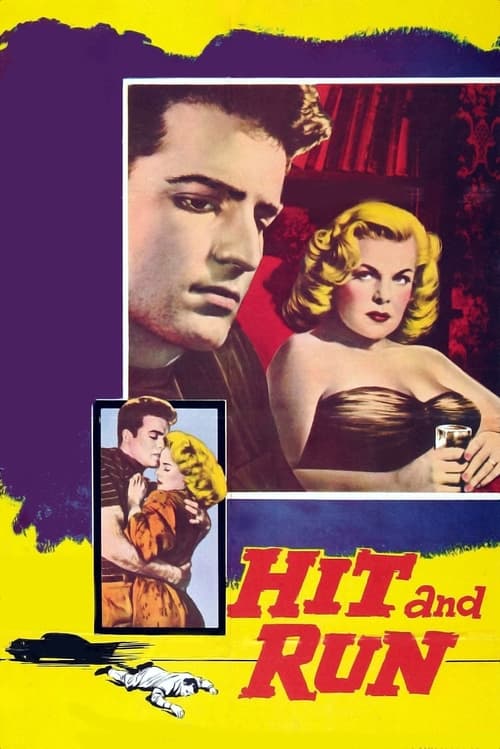
1957
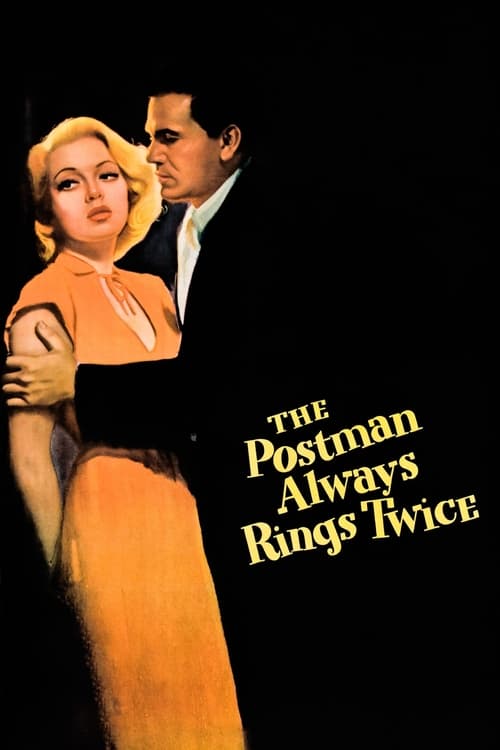
1946

1953

1953
No reviews yet. Be the first to share your thoughts on this movie!
Use the rating form above to leave a star rating and optional review.