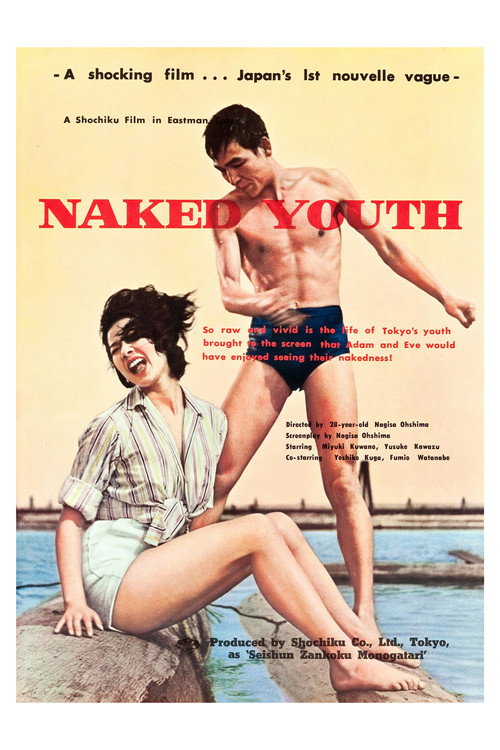
Cruel Story of Youth
1960
No user ratings available yet
Representation score: 6.3 out of 10

Representation Score
Good
1960
Director
Nagisa Ōshima
Runtime
88 minutes
Average Rating
No ratings yetNew Showbiz Analysis
Nagisa Ōshima’s work serves as a critical examination of systemic power and social hierarchies. Its strength lies in its cultural subversion, using the aftermath of World War II to break down traditional Japanese institutions and family structures. However, the film lacks explicit demographic diversity. It does not clearly represent LGBTQ+ identities, racial variety, or disability, focusing instead on a homogeneous cast and existential themes. Ultimately, the film’s value is in its intellectual defiance. It replaces traditional moralism with a lens of disillusionment, challenging the established norms of a transitioning society.
Category Breakdown
The film explores the nihilistic attitudes of post-war youth. While it doesn't explicitly depict LGBTQ identities, the rejection of traditional social norms creates a world where straight relationships aren't the only focus.
It challenges traditional gender roles by showing unstable, turbulent relationships. The film avoids reinforcing typical masculine dominance or feminine submission, instead highlighting the instability of post-war social norms.
Set in post-WWII Osaka, the film features a predominantly Japanese cast. It uses the characters' identity crises to reflect a country moving from imperial to Westernized systems.
The film effectively dismantles the traditional Japanese family structure. It portrays antisocial behaviors as natural reactions to a corrupt, hollowed-out social system and a changing capitalist society.
There is no significant depiction of neurodivergence or physical disabilities. Characters show existential unease rather than specific, empowered portrayals of disability.
Present on Screen
Limited or Absent
Official Synopsis
In Osaka's slum, capricious folks without futures engage in pilfering, assault and robbery, prostitution, and the trading of ID cards and blood.
1960
1950
1960

1949
1964
1970

1964

1960
No reviews yet. Be the first to share your thoughts on this movie!
Use the rating form above to leave a star rating and optional review.