The Bottom Line
1976
No user ratings available yet
Representation score: 2.4 out of 10
Representation Score
Limited
1959
Director
Rolf Thiele
Runtime
92 minutes
Average Rating
No ratings yetNew Showbiz Analysis
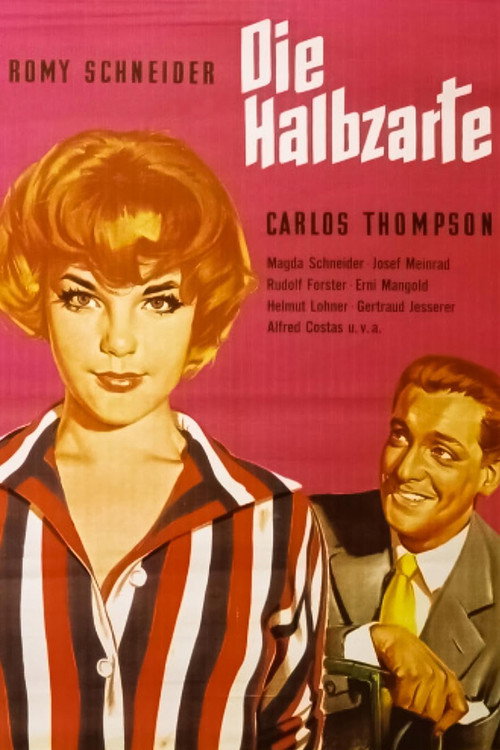
Die Halbzarte is a product of its time, characterized by a narrow demographic scope typical of 1950s West German cinema. It lacks broad representation, particularly regarding racial and LGBTQ+ identities, which limits its overall score. However, the film finds progressive elements through its central female character. Nicole’s transformation from a passive librarian to an active, sexually expressive creator disrupts the period's gendered social norms. Ultimately, the film serves as a comedic critique of institutional propriety, using the protagonist's subversive writing to challenge the era's strict moral decorum.
Category Breakdown
The film does not include any confirmed LGBTQ+ characters or representations of non-straight relationships. While there are hints at more modern themes, no specific queer identities are explicitly shown.
Nicole, the female protagonist, plays a significant role in driving the story by evolving from a librarian into a daring playwright. Her pursuit of sexual storytelling challenges the traditional expectations of women in the 1950s.
The film reflects the homogeneous demographics of 1959 West Germany, with no evidence of a diverse cast. This suggests a traditional Eurocentric focus.
The plot critiques rigid moral censorship by contrasting literary respectability with erotic exploration. It uses comedy to navigate the tension between traditional social structures and subversive creative expression.
There is no mention of characters with visible or invisible disabilities within the narrative.
Present on Screen
Limited or Absent
Official Synopsis
Nicole is a young librarian who writes romantic poetry. A successful new erotic novel, gives her the idea to secretly write a daring play, only about sex.
1976
1954

1979
1969
1969

1970
1961

1976
No reviews yet. Be the first to share your thoughts on this movie!
Use the rating form above to leave a star rating and optional review.