
Life Ahead
1958
No user ratings available yet
Representation score: 1.4 out of 10
Representation Score
Fair
1959
Director
Fernando Fernán Gómez
Runtime
102 minutes
Average Rating
No ratings yetNew Showbiz Analysis
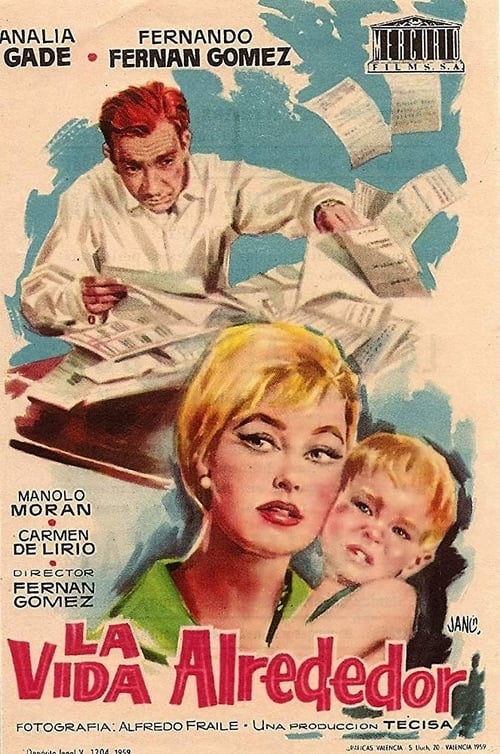
La vida alrededor is a period-specific social comedy that offers a subtle critique of 1950s economic constraints. While the film lacks diversity in terms of race, ethnicity, and LGBTQ+ identities, it provides a meaningful challenge to traditional gender roles through its female lead. The narrative's strength lies in its ability to challenge traditional social hierarchies within a domestic framework. However, the film remains limited by the demographic homogeneity and narrow focus on a traditional, straight relationship structure typical of its era. Ultimately, the film uses the struggle of a nuclear family to explore systemic instability and the pragmatic ways individuals navigate class structures.
Category Breakdown
The film focuses on a traditional marriage between Josephine and Antonio. There are no explicit LGBTQ+ characters or identities that challenge the assumption that everyone is straight or cisgender.
Josephine demonstrates a significant role in driving the story by trying to educate her unborn child to avoid future schooling costs. This shows her intellectual rigor and challenges the era's typical depiction of submissive domesticity.
The story is set in a mid-century Spanish social context and reflects the demographic homogeneity of the time. There is no evidence of a multi-ethnic cast.
The film critiques mid-century capitalism and class structures through the couple's economic struggles. Antonio's involvement in the underworld adds a nuanced view of morality and professional ethics.
There is no information available regarding the inclusion of characters with visible or invisible disabilities.
Present on Screen
Limited or Absent
Official Synopsis
Josephine and Antonio have reached a delicate economic balance after marriage. The salary of lawyer from him, and wins her in the hospital, allows them to survive and fantasize about some freak. The situation is complicated by the news that Josephine is pregnant. Ahead of the debacle that may involve having a "child who eats everything, including food," Josephine teaches the baby still in her womb, higher education courses in order to save some money in schools. Meanwhile, Antonio enters the underworld scene, looking for customers who offer their services as a lawyer.
1958

1970
1959

1967
1953
1989

1951
1967
No reviews yet. Be the first to share your thoughts on this movie!
Use the rating form above to leave a star rating and optional review.