
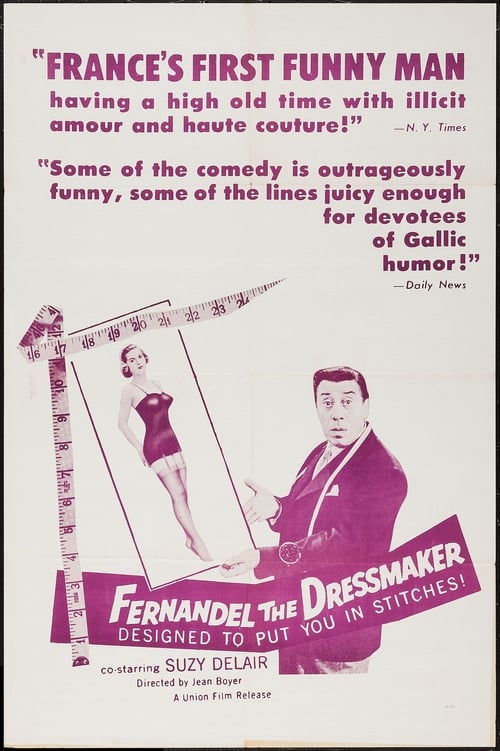
The Woman's Confidant
1959
No user ratings available yet
Representation score: 1.2 out of 10
Representation Score
Limited
1956
Director
Jean Boyer
Runtime
95 minutes
Average Rating
No ratings yetNew Showbiz Analysis
Jean Boyer's comedy stands out by reversing mid-century gender roles. By placing a man in a traditionally feminine professional environment, the film challenges typical expectations of male dominance in the workplace. However, the film remains rooted in its time, reflecting the demographic norms of 1950s European cinema. It lacks complexity around intersecting identities and social structures, focusing instead on traditional social norms and capitalist preservation. Ultimately, the film serves as a character-driven exploration of professional role reversal rather than a critical look at systemic identity or diversity.
Category Breakdown
The film doesn't show non-traditional gender identities or same-sex relationships. It focuses on heterosexual marriage issues and interactions with female mannequins.
The story challenges mid-century masculinity by putting a male character in a female-dominated fashion industry. Humor comes from flipping traditional gender roles in professional settings and labor.
The cast mirrors the typical demographics of 1950s French cinema. There is no indication of non-white actors or the use of non-human metaphors.
The film follows a traditional capitalist approach focused on maintaining a couture house. It adheres to conventional moral views on social scandals and infidelity.
There is no evidence of physical, neurodivergent, or sensory disabilities being portrayed in the film.
Present on Screen
Limited or Absent
Official Synopsis
A modest taylor the women found irresistible inherit a Maison de couture in financial difficulty. Decided to save it he prepare a great collection. But when his wife discovered his relations with one of the mannequin, how would he prevent the scandale without loosing... both of them?!
1959
1978
1943
1976

1967

1957

1961

1974
No reviews yet. Be the first to share your thoughts on this movie!
Use the rating form above to leave a star rating and optional review.