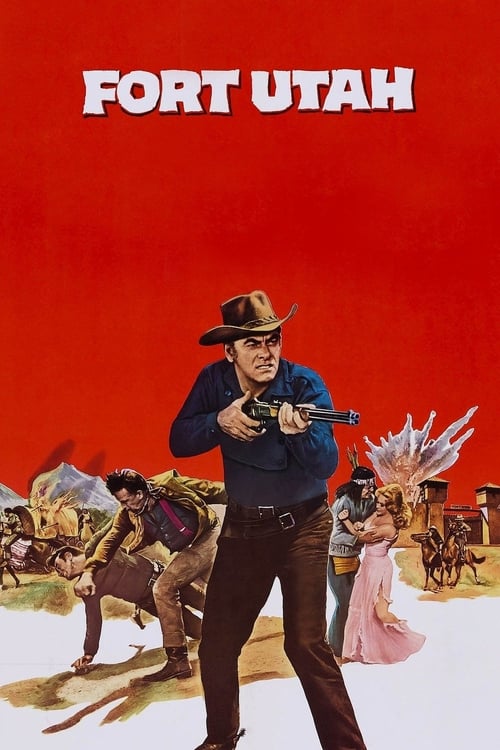
Fort Utah
1967
No user ratings available yet
Diversity score: 2.4 out of 10

1955
ApprovedDirector
Lesley Selander
Runtime
78 minutes
Average Rating
No ratings yetSynopsis
Apaches plan to attack a fort by wearing uniforms plundered from a cavalry officer's (Peter Graves) supply column.
Overall Score
Minimal
Category Breakdown
LGBTQ+ Representation
The film operates within a strictly heteronormative framework. There are no depictions of non-heteronormative identities or queer-coded subtext present in the narrative.
Gender Representation
The story is almost exclusively male-driven, focusing on military authority and masculine conflict. Women are not central to the plot, reinforcing traditional roles where leadership remains a male domain.
Racial & Ethnic Diversity
Native American characters serve as a central plot element but are utilized through period-specific Western tropes. They function primarily as adversarial forces rather than nuanced, high-agency characters.
Religious & Cultural Diversity
The narrative reinforces the legitimacy of Western military structures and formal justice systems. It seeks to resolve tension within the established social and legal order of the era.
Disability Representation
There is no discernible focus on visible or invisible disabilities. Characters are presented as able-bodied participants in military and frontier life without engagement with physical or neurodivergent impairments.
Strengths
Areas for Improvement
AI Analysis
Fort Yuma is a quintessential product of 1950s genre cinema, prioritizing established hierarchies and traditionalist values. The film's architecture centers on military authority and masculine agency, leaving little room for diverse perspectives. While the inclusion of Native American characters provides ethnic presence, these roles are framed by conventional Western tropes. They act as drivers for conflict against the military establishment rather than receiving complex character development. Ultimately, the film functions as a reinforcement of the mid-century status quo. It lacks the progressive subversion or systemic critique necessary to move beyond its era's standard narrative constraints.
1967
1948
1965
1957
1954
1954
1953
1952

1952
1942
1947
1958
No reviews yet. Be the first to share your thoughts on this movie!
Use the rating form above to leave a star rating and optional review.