Border Bandits
1946
No user ratings available yet
Representation score: 0.6 out of 10
Representation Score
Minimal
1947
ApprovedDirector
Lesley Selander
Runtime
67 minutes
Average Rating
No ratings yetNew Showbiz Analysis
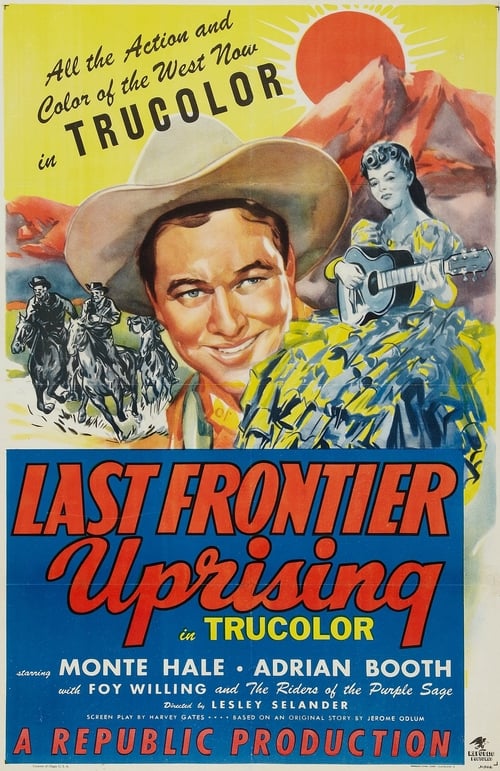
Last Frontier Uprising is a quintessential mid-century B-Western that prioritizes genre stability over social subversion. The narrative architecture relies heavily on established clichés of the 1940s, focusing on masculine competence and the enforcement of institutional order. The film functions as a stabilizer for the Western genre, reinforcing traditional social hierarchies. It lacks any intentionality to disrupt the period's standard cinematic conventions or provide diverse perspectives. Ultimately, the work upholds the status quo of its era, presenting a world defined by clear moral binaries and rigid gender roles.
Category Breakdown
The film follows a traditional structure that assumes everyone is straight or cisgender. The narrative centers on a conventional romantic relationship between Monte Hale and Adrian Booth.
The film reinforces traditional gender roles where the male protagonist acts as the decisive leader, while the female lead is portrayed through passive, ornamental descriptors.
The production reflects the era's demographic norms, centering on white protagonists. There is no a significant role in driving the story for characters of color.
The plot emphasizes federal law and the protection of property. It promotes a clear moral binary that reinforces the legitimacy of government authority.
There is no mention of characters possessing visible or invisible disabilities within the narrative.
Present on Screen
Limited or Absent
Official Synopsis
Singing cowboy Monte Hale plays "himself" in the Republic western Last Frontier Uprising. Actually, he's not really himself, but a federal agent, dispatched to Texas to buy horses on behalf of the government. Hale runs up against a vicious gang of horse thieves, including such veteran western hard cases as Roy Barcroft and Philip van Zandt. The romantic interest is in the dainty hands of Adrian Booth, who used to go by the name of Lorna Gray. Put together with the standard Republic efficiency, The Last Frontier Uprising benefits from the breathless direction of Lesley Selander.
1946
1940
1940
1944
1943
1948
1947
1948
No reviews yet. Be the first to share your thoughts on this movie!
Use the rating form above to leave a star rating and optional review.