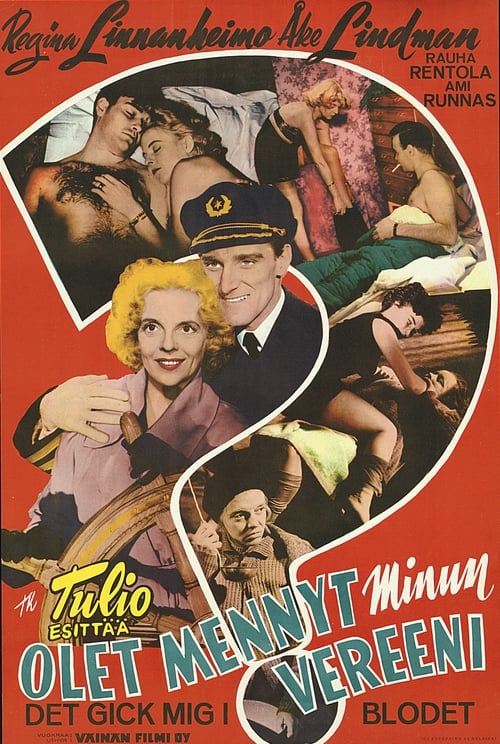
Olet mennyt minun vereeni
1956
No user ratings available yet
Diversity score: 2.4 out of 10

1952
Director
Teuvo Tulio
Runtime
110 minutes
Average Rating
No ratings yetSynopsis
Eeva Isokari flees her home from the jealousy of her husband, judge Lauri. The next day, a body is found on the railway tracks. Lauri thinks his wife is dead. The woman, who has lost her memory, has ended up in a prison run by her husband. Known in english as A Woman of Crime.
Overall Score
Limited
Category Breakdown
LGBTQ+ Representation
The film lacks any depiction of non-heteronormative identities or same-sex intimacy. The narrative focuses on traditional marital jealousy and domestic instability.
Gender Representation
Eeva Isokari shows significant agency through her flight and survival. However, the power imbalance remains high, as her husband holds judicial authority over her.
Racial & Ethnic Diversity
The setting and cast reflect a homogeneous demographic typical of 1952 Finland. There is no evidence of racial blending or non-white casting.
Religious & Cultural Diversity
The story critiques institutional justice by placing a woman in a prison run by her husband. It explores subjective morality through themes of identity and guilt.
Disability Representation
Amnesia serves as a central plot driver. While used as a mystery device, the protagonist's struggle with her lost identity provides some character depth.
Strengths
Areas for Improvement
AI Analysis
Teuvo Tulio's drama is a product of its era, deeply rooted in mid-century Finnish social structures. It centers on a woman's struggle against patriarchal authority, specifically through the lens of a husband who wields legal power over his wife. The film offers psychological complexity via the protagonist's amnesia and the instability of justice. However, it lacks intersectional breadth, remaining within a homogeneous and traditional demographic framework. While the narrative disrupts domestic stability, it does not challenge the systemic hierarchies of the time, resulting in a score that reflects its historical limitations.
1956
1947
1946
1961
1946
1954
1925

1980
1952

1955

1929

1949
No reviews yet. Be the first to share your thoughts on this movie!
Use the rating form above to leave a star rating and optional review.