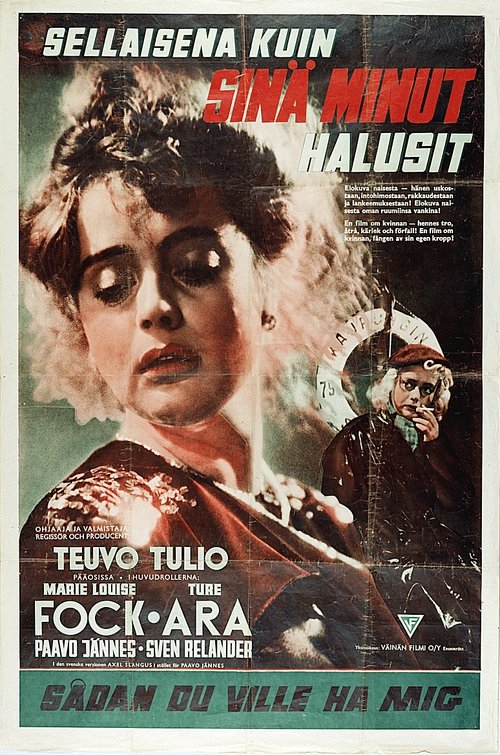
Sellaisena kuin sinä minut halusit
1944
No user ratings available yet
Representation score: 3.2 out of 10
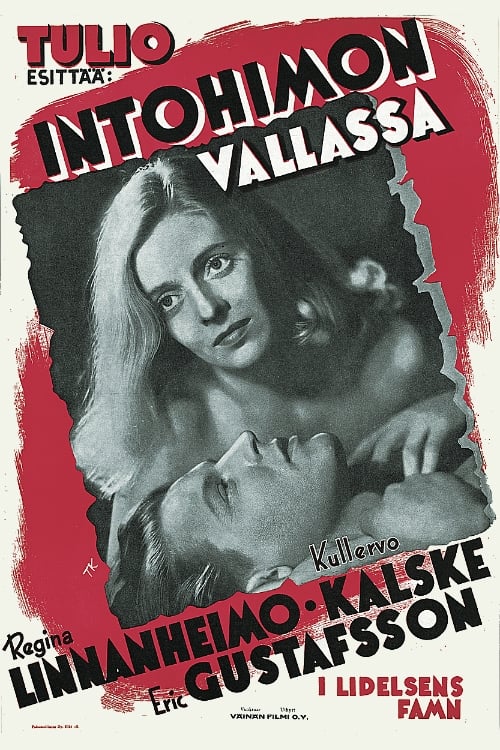
Representation Score
Limited
1947
Director
Teuvo Tulio
Runtime
90 minutes
Average Rating
No ratings yetNew Showbiz Analysis
Teuvo Tulio's drama focuses on critiquing gender hierarchies and the restrictive nature of traditional family structures. The protagonist's struggle against an arranged marriage adds emotional depth and challenges the notion of domestic stability. However, the film is limited by the era's lack of diverse representation. It lacks characters representing LGBTQ+ identities, racial minorities, and people with disabilities, reflecting the demographic homogeneity of its time. Ultimately, while the film challenges certain patriarchal norms, its narrow scope prevents a higher diversity score.
Category Breakdown
The film does not include any visible LGBTQ+ characters or non-straight relationships. The plot revolves around a traditional romantic conflict involving marriage and lost love.
The story centers on a woman's struggle against patriarchal structures. By showing the husband as an alcoholic brute, the film challenges the stereotype of the stable male head of household.
The film reflects the homogeneous demographics typical of 1947 Finland. There is no indication of racial diversity or non-majority casting.
The story critiques the family unit as an oppressive force used for economic gain. However, it stays within a classic melodramatic framework rather than a broader systemic critique.
There is no evidence of characters with physical or neurodivergent disabilities. The available records do not indicate any representation in this category.
Present on Screen
Limited or Absent
Official Synopsis
A young woman is forced into an arranged marriage by her family in hopes of securing their future, but her husband turns out to be an alcoholic brute of a man and she longs for the man she truly loves. In English known as Passionate Power.
1944

1951
1941

1950

1911

2009
1938

1945
No reviews yet. Be the first to share your thoughts on this movie!
Use the rating form above to leave a star rating and optional review.