
Mister Buddwing
1966
No user ratings available yet
Representation score: 2.9 out of 10
Representation Score
Limited
1961
Director
Henri Colpi
Runtime
98 minutes
Average Rating
No ratings yetNew Showbiz Analysis
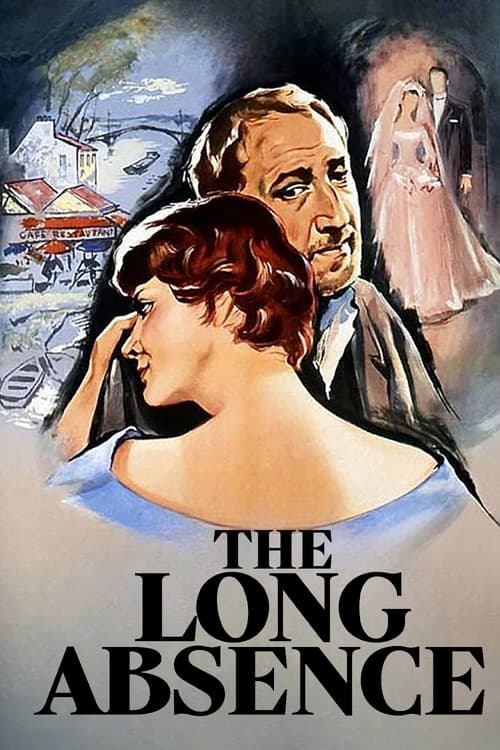
The Long Absence is a minimalist study of grief and memory that prioritizes atmospheric existentialism over social breadth. While it centers on a female protagonist, her role is defined by her relationship to a man, keeping the narrative within traditional gendered emotional spheres. The film's social landscape is remarkably narrow, reflecting the homogeneous demographic of 1960s rural France. It lacks racial diversity and avoids any engagement with non-straight-centered identities or institutional critiques. Ultimately, the film uses cognitive impairment as a narrative tool for mystery rather than a character study, focusing on traditional character-driven drama without multi-layered complexity.
Category Breakdown
The film focuses solely on a traditional heterosexual relationship, offering no representation of LGBTQ+ identities.
Therese is portrayed as a central business owner, but her role is closely tied to her domestic life and her relationship with her husband.
The film's setting is a homogeneous mid-century French village with no racial diversity or non-white perspectives.
The narrative focuses on individual psychological states within a secular, rural framework, avoiding any religious or political critiques.
The film uses cognitive impairment as a plot device, focusing on the mystery rather than exploring neurodivergence in depth.
Present on Screen
Limited or Absent
Official Synopsis
Therese, a café owner, mourns the mysterious disappearance of her husband sixteen years earlier. A tramp arrives in the town and she believes him to be her husband. But he is suffering from amnesia and she tries to bring back his memory of earlier times.
1966

1963

1980

1961
1983

1942
1931

1948
No reviews yet. Be the first to share your thoughts on this movie!
Use the rating form above to leave a star rating and optional review.