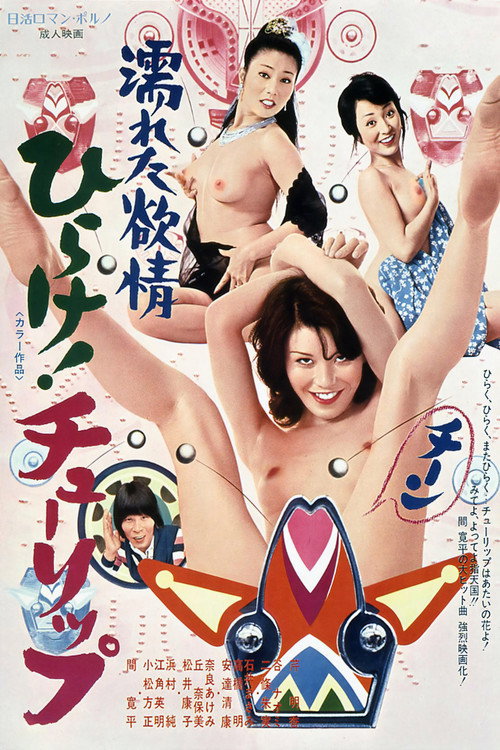
Wet Lust: Opening the Tulip
1975
No user ratings available yet
Representation score: 5.6 out of 10

Representation Score
Fair
1981
Director
Yoshimitsu Morita
Runtime
103 minutes
Average Rating
No ratings yetNew Showbiz Analysis
Yoshimitsu Morita’s film is a postmodern character study that emphasizes individual autonomy over traditional social structures. It successfully challenges gender hierarchies by highlighting female experiences and autonomy within a transient urban landscape. However, the film remains demographically narrow. The absence of LGBTQ+ representation and the homogeneous racial makeup reflect the specific socio-cultural context of 1980s Japan without offering broader diversity. Ultimately, the film’s strength lies in its intellectual disruption of social norms rather than its demographic variety. It prioritizes a nuanced, situational view of human connection over traditional stability.
Category Breakdown
The film centers on heterosexual relationships and urban interactions. It does not explicitly depict queer identities or same-sex intimacy but avoids strict assumptions about straight relationships.
Women are shown with autonomy and ability to act, focusing on their personal journeys rather than traditional male-driven narratives. They navigate relationships independently, avoiding passive roles.
The film reflects a culturally uniform 1980s Japan. Though there is no evidence of whitewashing, the cast lacks diverse ethnic representation.
The film critiques traditional social institutions and the cohesive family unit. It highlights moral relativism and urban alienation as responses to modern fragmentation.
There are no prominent depictions of visible or invisible disabilities. Characters are not used as plot devices or subjected to mockery regarding disability.
Present on Screen
Limited or Absent
Official Synopsis
Life seems to be good for Shintoto, an up-and-coming rakugo artist who has just had his first sexual experience at a local brothel. Lucky for him, he gets to date the beautiful sex worker he meets that day, and a younger high school rakugo aficionado is also vying for his attention. But for clumsy, heart-on-his-sleeve Shintoto, life doesn’t stay rosy for long.
1975

1970

1976

2017
1982

1988

1995
1971
No reviews yet. Be the first to share your thoughts on this movie!
Use the rating form above to leave a star rating and optional review.