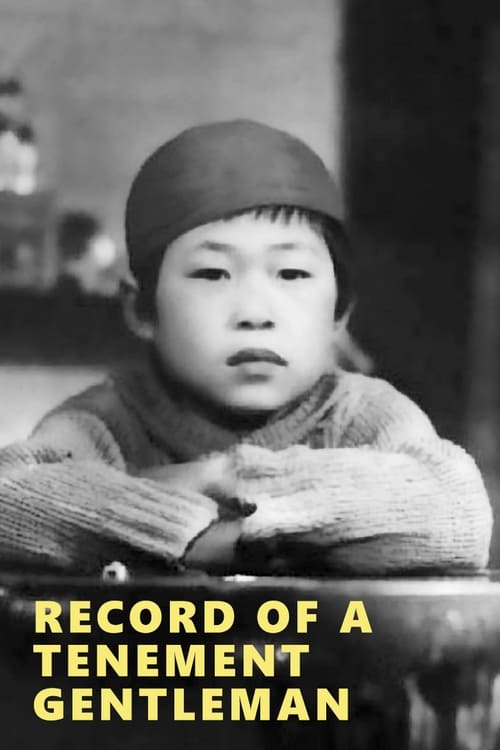
Record of a Tenement Gentleman
1947
No user ratings available yet
Representation score: 2.3 out of 10
Representation Score
Limited
1959
Not RatedDirector
Yasujirō Ozu
Runtime
94 minutes
Average Rating
No ratings yetNew Showbiz Analysis
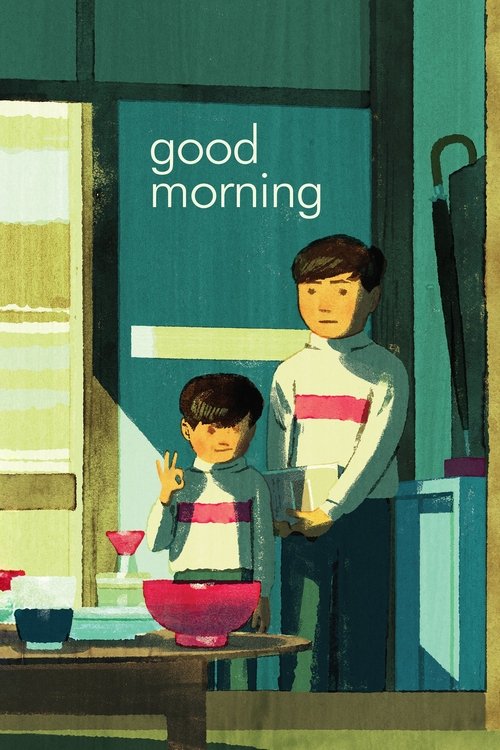
Good Morning is a sophisticated exploration of generational changes and the unsettling effects of modern material culture. While it lacks contemporary multi-layered diversity, it challenges traditional authority by highlighting the perspectives of its young protagonists. The film's strength lies in its refusal to portray the nuclear family hierarchy as a source of unquestioned wisdom. Instead, it uses the children's strategic resistance to the adult world's fixation on technology to critique postwar consumerism. Ultimately, the work serves as a localized, culturally specific portrait of mid-century Japan, emphasizing social realism and the tension between tradition and modernization over broad demographic representation.
Category Breakdown
The film does not depict any LGBTQ+ identities or non-cisgender relationships. It focuses solely on heterosexual relationships and does not include any queer domesticity.
Gender roles in the film reflect traditional 1950s hierarchies, with mothers staying at home and fathers working outside. However, adults are shown to be fallible rather than as unshakeable authorities.
The cast is ethnically uniform, focusing on a detailed look at Japanese suburban life. It offers a nuanced portrayal of a specific cultural identity rather than a diverse range of ethnicities.
The film critiques consumerism by centering the plot around children protesting the purchase of a television. This highlights Western goods as disruptive elements within the traditional home.
There are no prominent depictions of physical or neurodivergent disabilities that significantly influence the narrative or character development.
Present on Screen
Limited or Absent
Official Synopsis
Two boys beg their parents for a television set, nagging them until all patience is lost. The parents order the boys to be quiet and the boys do exactly that--refusing to utter a word. The boys' silence ultimately puts the whole neighborhood into turmoil.
1947
1932
1958
1931
1952

1960
1988

1937
No reviews yet. Be the first to share your thoughts on this movie!
Use the rating form above to leave a star rating and optional review.