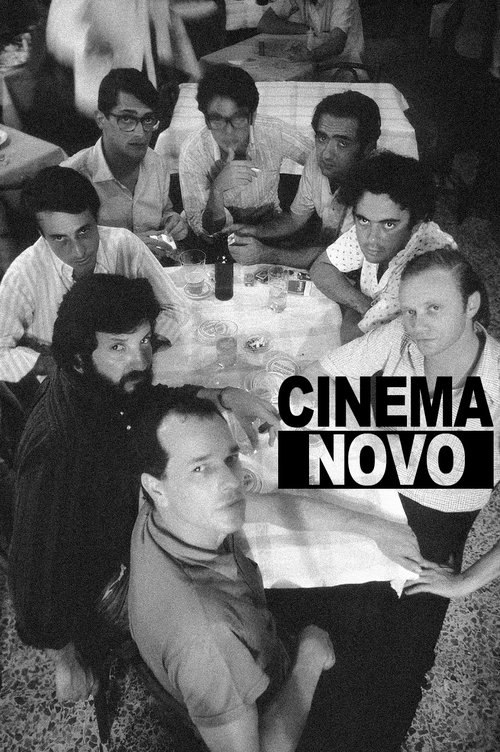
Improvised and Purposeful: Cinema Novo
1967
No user ratings available yet
Diversity score: 7.6 out of 10

1968
Director
Joaquim Pedro de Andrade
Runtime
24 minutes
Average Rating
No ratings yetSynopsis
In 1967, de Andrade was invited by the Italian company Olivetti to produce a documentary on the new Brazilian capital city of Brasília. Constructed during the latter half of the 1950s and founded in 1960, the city was part of an effort to populate Brazil’s vast interior region and was to be the embodiment of democratic urban planning, free from the class divisions and inequalities that characterize so many metropolises. Unsurprisingly, Brasília, Contradições de uma Cidade Nova (Brasília, Contradictions of a New City, 1968) revealed Brasília to be utopic only for the wealthy, replicating the same social problems present in every Brazilian city. (Senses of Cinema)
Overall Score
Good
Category Breakdown
LGBTQ+ Representation
The film focuses on class struggle and urban sociology rather than identity politics. It lacks explicit LGBTQ+ narratives or non-cisnormative identities, though it avoids derogatory depictions.
Gender Representation
The narrative prioritizes class-based analysis over gendered dynamics. While it depicts the domestic lives of the urban poor, it does not actively center female agency or subvert traditional hierarchies.
Racial & Ethnic Diversity
The film disrupts modernist myths by centering migrant workers and marginalized populations. It provides high agency to the diverse racial makeup of the working class to challenge Eurocentric urban aesthetics.
Religious & Cultural Diversity
The work offers a profound critique of Western-style capitalist urban planning. It uses a post-colonial lens to deconstruct the notion of Western-led developmentalism as a universal good.
Disability Representation
There is no significant evidence regarding the portrayal of visible or invisible disabilities. The focus remains on broader socioeconomic and architectural contradictions.
Strengths
Areas for Improvement
AI Analysis
Joaquim Pedro de Andrade uses his Cinema Novo pedigree to deconstruct national myths through a sociological lens. The film succeeds by exposing the gap between idealized modernist architecture and the lived reality of marginalized classes. While the documentary lacks depth in identity-specific categories like gender or LGBTQ+ representation, it achieves progressive impact through its systemic critique. It effectively challenges the legitimacy of capitalist urbanism. The film's strength lies in its refusal to present a homogeneous view of Brazilian progress, instead highlighting the tension between the elite and the laborer.
1967

1959
1968
1968
2019

1974
1985
1964

1966
2014

1968
1999
No reviews yet. Be the first to share your thoughts on this movie!
Use the rating form above to leave a star rating and optional review.