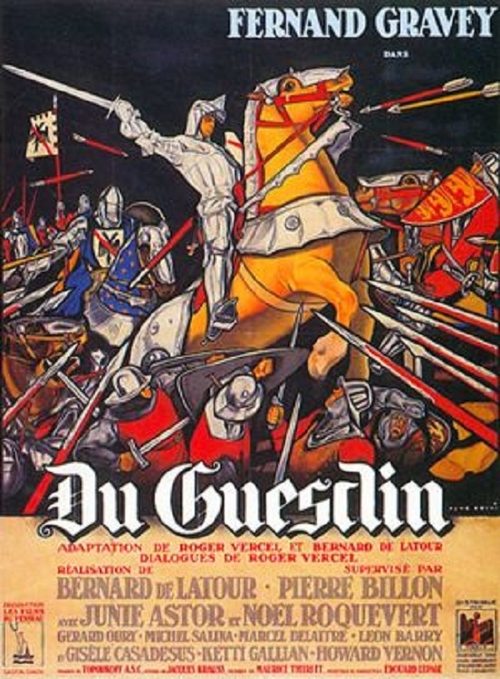
Du Guesclin
1949
No user ratings available yet
Diversity score: 2.5 out of 10

1936
Director
Sinclair Hill
Runtime
71 minutes
Average Rating
No ratings yetSynopsis
Set in 15th-century Italy, The Cardinal stars Matheson Lang as one Cardinal de Medici. Bound by the rules of the confessional, the cardinal is unable to disclose the multitude of sins revealed to him by one of his most influential parishioners. De Medici's dilemma is compounded by the fact that the confessor has committed a murder for which the Cardinal's brother has been arrested. The basic plot gimmick was good for another go-round in the 1953 Hitchcock flick I Confess. This 7-reel British film was based on a play by Louis N. Parker.
Overall Score
Limited
Category Breakdown
LGBTQ+ Representation
The film focuses on the religious and ethical dilemmas of a high-ranking clergyman. There is no evidence of non-cisnormative identities or same-sex intimacy within the narrative.
Gender Representation
Agency is concentrated in male figures of religious and familial power. The plot centers on clerical authority and the political machinations of the Cardinal and his brother.
Racial & Ethnic Diversity
Set in 15th-century Italy and produced by a British studio, the film reflects Eurocentric casting norms. The cast appears predominantly white with no indication of non-European identities.
Religious & Cultural Diversity
The story explores the tension between individual morality and religious institutionalism. It reinforces the sanctity of the confessional and the weight of traditional ecclesiastical law.
Disability Representation
There is no evidence of characters with visible or invisible disabilities in the narrative.
Strengths
Areas for Improvement
AI Analysis
The Cardinal is a traditional period drama that prioritizes historical and institutional hierarchies. The narrative structure is built around patriarchal duty and the preservation of religious sanctity, offering very little disruption to conventional social structures. Representation is heavily skewed toward male authority figures and Eurocentric perspectives. The film operates within the strict heteronormative and ecclesiastical frameworks typical of 1930s cinema, focusing on the internal moral conflicts of the clergy rather than diverse social perspectives. Ultimately, the film serves to uphold the gravity of religious institutions. It lacks intersectional casting and provides minimal visibility for marginalized identities, focusing instead on the classical storytelling of the era.
1949
1939
2022
1920
1961
1954
1918
1973
1977
1955
2015
1955
No reviews yet. Be the first to share your thoughts on this movie!
Use the rating form above to leave a star rating and optional review.