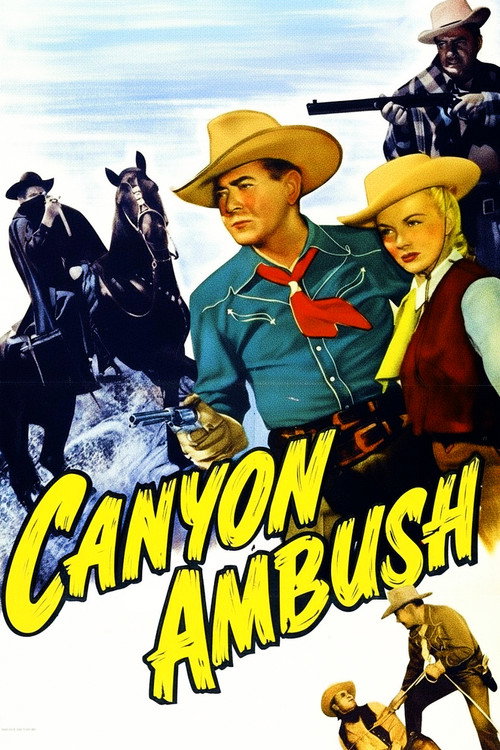
Canyon Ambush
1952
No user ratings available yet
Diversity score: 2.1 out of 10
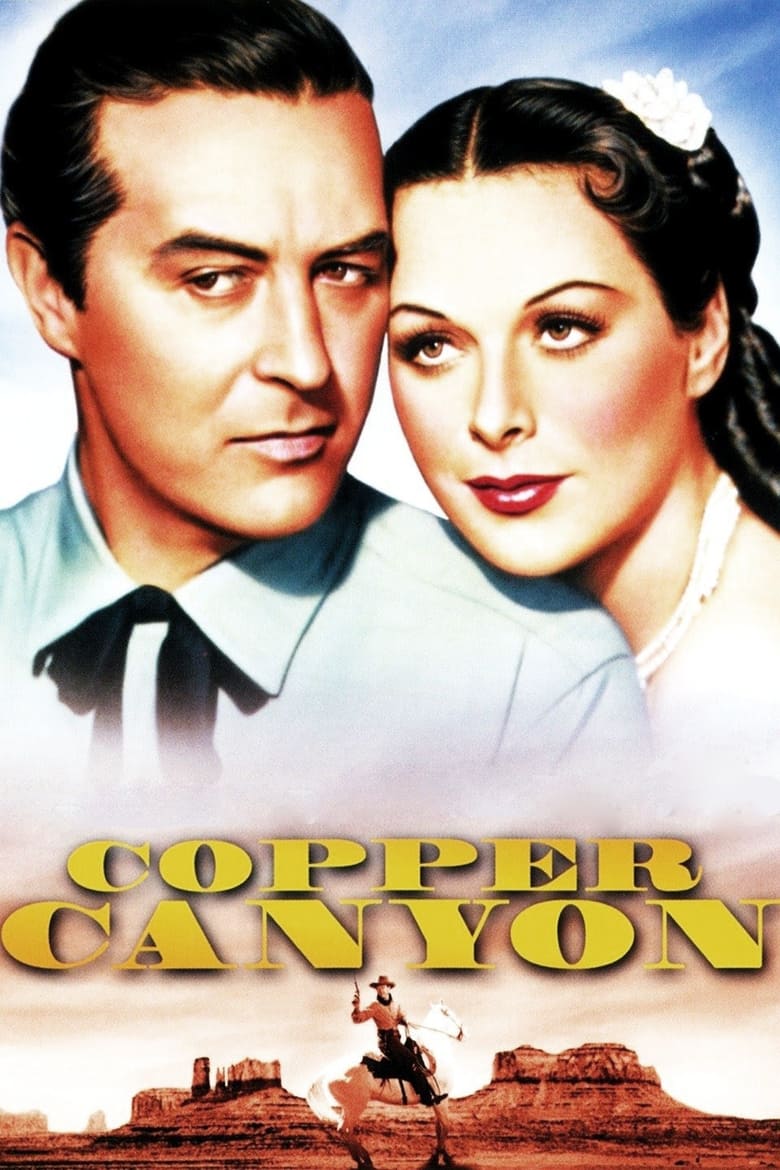
1950
NRDirector
John Farrow
Runtime
84 minutes
Average Rating
No ratings yetSynopsis
A group of copper miners, Southern veterans, are terrorized by local rebel-haters, led by deputy Lane Travis. The miners ask stage sharpshooter Johnny Carter to help them, under the impression that he is the legendary Colonel Desmond. It seems they're wrong; but Johnny's show comes to Coppertown and Johnny romances lovely gambler Lisa Roselle, whom the miners believe is at the center of their troubles.
Overall Score
Limited
Category Breakdown
LGBTQ+ Representation
The film operates within a strictly heteronormative framework. There are no discernible LGBTQ+ characters or explorations of non-cisnormative identities.
Gender Representation
Gender roles follow mid-century hierarchies, focusing on traditional masculinity and sharpshooting. While Lisa Roselle shows some independence as a gambler, her arc centers on her romance with the male lead.
Racial & Ethnic Diversity
The cast is predominantly white, consistent with 1950s Westerns. Mexican characters appear due to the border setting but function within standard period tropes rather than offering nuanced portrayals.
Religious & Cultural Diversity
The narrative reinforces traditional Western values like frontier justice and personal honor. It avoids anti-Western critiques, leaning instead toward a traditionalist view of morality and law.
Disability Representation
There are no visible or invisible disabilities portrayed with agency. No characters are defined by neurodivergence or physical impairment.
Strengths
Areas for Improvement
AI Analysis
Copper Canyon is a conventional mid-century Western that prioritizes linear heroism and established genre tropes. The story relies on mistaken identity and frontier justice to drive a standard heroic arc, reinforcing the social structures of its era. The film lacks intentionality regarding marginalized identities, instead adhering to the period's standard depictions of race and gender. It functions as a traditionalist piece of storytelling rather than a critique of systemic power or identity. Ultimately, the production reflects the mid-20th-century studio system, focusing on traditional moral frameworks and conventional social hierarchies.
1952
1957

1946
1942
1953
1945
1946
1941
1952

1944
1935
1944
No reviews yet. Be the first to share your thoughts on this movie!
Use the rating form above to leave a star rating and optional review.