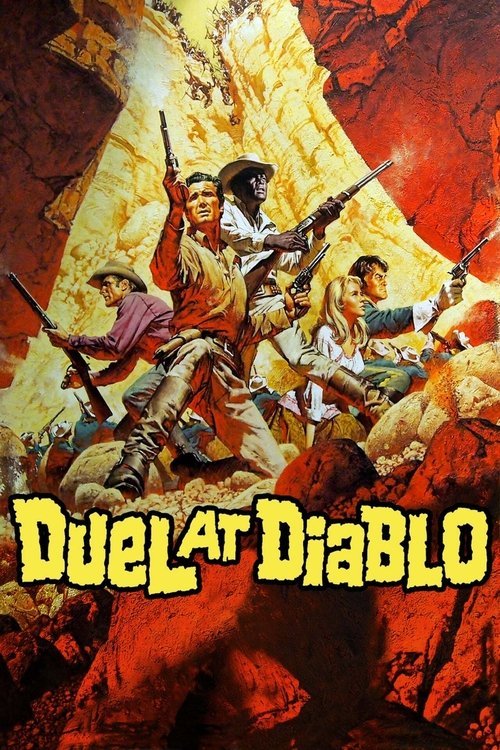
Duel at Diablo
1966
No user ratings available yet
Representation score: 1.0 out of 10
Representation Score
Minimal
1953
NRDirector
Nathan Juran
Runtime
79 minutes
Average Rating
No ratings yetNew Showbiz Analysis
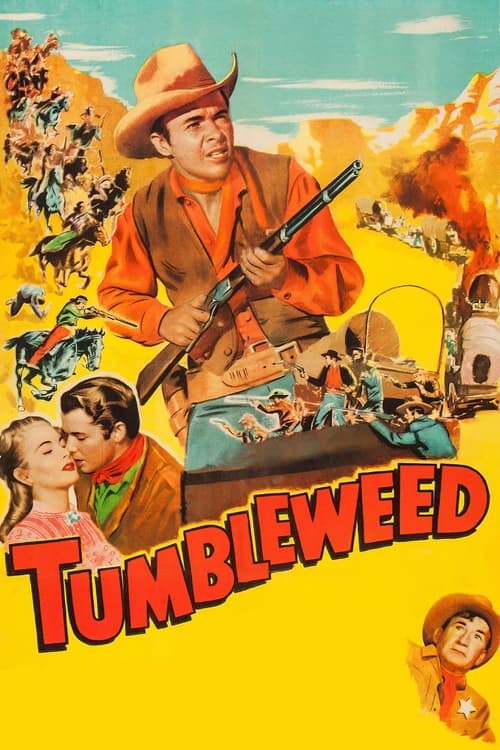
Tumbleweed is a classic mid-century Western that sticks closely to established genre clichés and social hierarchies. The narrative centers on individual heroism and frontier justice, reinforcing the values of the time without challenging them. The film's structure relies on traditional masculine archetypes and assumptions that everyone is straight. While it slightly deviates from the 'savage' stereotype by revealing a white man as the true architect of the violence, the racial conflict still validates the hero's moral stance. Overall, the film lacks the intention to disrupt cultural norms, presenting a world where the main ability to act is held by men and racial dynamics serve the protagonist's journey.
Category Breakdown
The film does not include any LGBTQ+ characters or explore non-straight identities. It follows a traditional framework that assumes everyone is straight.
Women in the film are mostly passive supporters, while the male character drives the plot. Women primarily exist to provide stakes for the hero.
Indigenous characters are portrayed using typical 1950s stereotypes as external threats. Although a white antagonist is eventually revealed, the narrative remains focused on the white protagonist.
The story upholds traditional Western values and the idea of westward expansion. It emphasizes survival and the moral justification of defending the pioneer spirit.
The film does not depict any disabilities or neurodivergence. Characters are defined by their physical abilities needed for frontier survival.
Present on Screen
Limited or Absent
Official Synopsis
Jim Harvey is hired to guard a small wagon train as it makes its way west. The train is attacked by Indians and Harvey, hoping to persuade Aguila, the chief, to call off the attack due to Harvey's having saved his son's life, leaves the train to negotiate. He is captured and the rest of the train is wiped out except for two sisters. Escaping and showing up in town later, Harvey is nearly hanged as a deserter, but gets away. Eventually caught by the sheriff and his posse, they are attacked by Indians. This time the Indians are defeated and Aguila, captured and dying, reveals the identity of the white man who engineered the initial attack on the wagon train, just as the perpetrator rides up behind them.
1966
1960
1956
1940

1953
1959
1957
1959
No reviews yet. Be the first to share your thoughts on this movie!
Use the rating form above to leave a star rating and optional review.