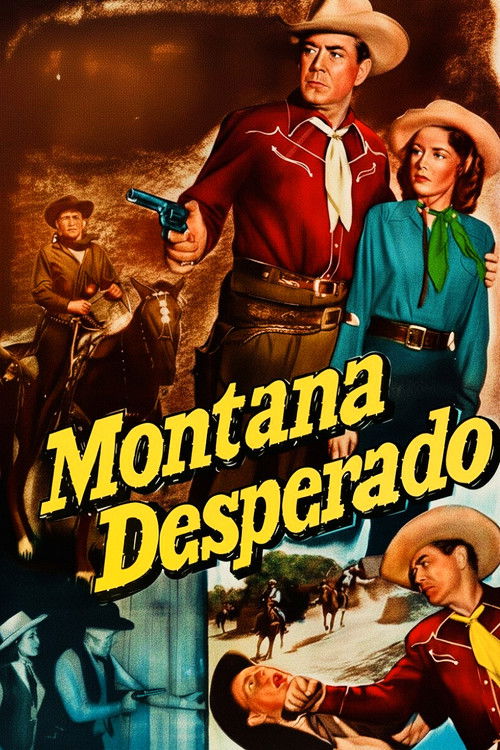
Montana Desperado
1951
No user ratings available yet
Representation score: 0.3 out of 10
Representation Score
Minimal
1944
ApprovedDirector
Wallace Fox
Runtime
60 minutes
Average Rating
No ratings yetNew Showbiz Analysis
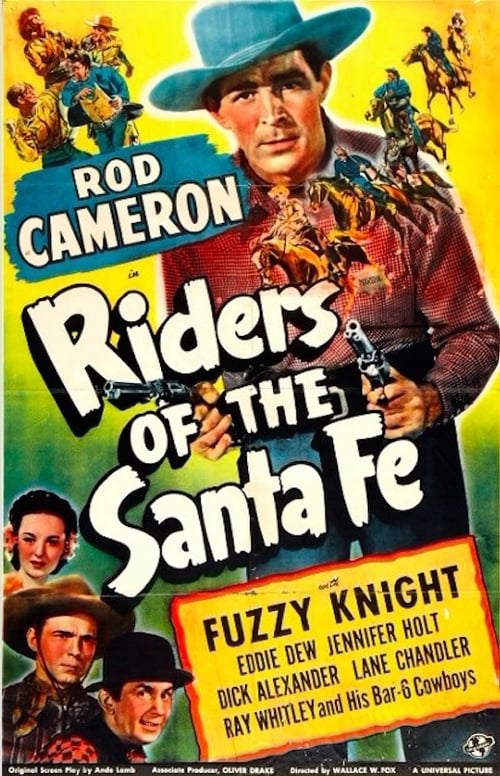
Riders of the Santa Fe is a quintessential B-movie Western that prioritizes genre stability over social complexity. The story centers on a struggle for municipal control and water rights, a conflict driven entirely by male characters. This focus reinforces mid-century gender hierarchies and traditional masculine leadership. The film lacks depth in representing multiple aspects of identity, offering a homogeneous view of the American West. It adheres to the era's standard depictions of hegemony, providing no representation for LGBTQ+ individuals or people with disabilities. The narrative serves to uphold the legitimacy of law and governance rather than challenging existing social structures. Ultimately, the film functions as a non-subversive piece of cinema. It relies on established clichés to deliver a streamlined, formulaic experience that aligns with the mid-20th-century cinematic status quo.
Category Breakdown
The film follows rigid structures typical of 1940s Westerns, assuming everyone is straight or cisgender. There is no evidence of non-binary or LGBTQ+ identities or same-sex relationships.
The plot focuses almost exclusively on male-driven conflict and leadership. Women lack roles of intellectual or physical ability to act, reinforcing traditional masculine stereotypes.
The film utilizes a homogeneous casting approach typical of its era, reinforcing Western hegemony without providing diverse perspectives or non-white representation.
The narrative follows a standard arc of restoring order through a Marshal, upholding institutional legitimacy rather than critiquing systemic Western structures.
There is no evidence of characters with visible or invisible disabilities. The film does not use disability as a narrative device.
Present on Screen
Limited or Absent
Official Synopsis
Tom Benner controls the town and the water supply. When his stooge Mayor rebels, he has him killed and replaced with Bullseye Johnson who immediately brings in Matt Canway as the town marshal. Conway doesn't carry a gun but he is soon on to Benner and out to prove that Benner has altered the survey lines to obtain the water rights.
1951
1939
1939
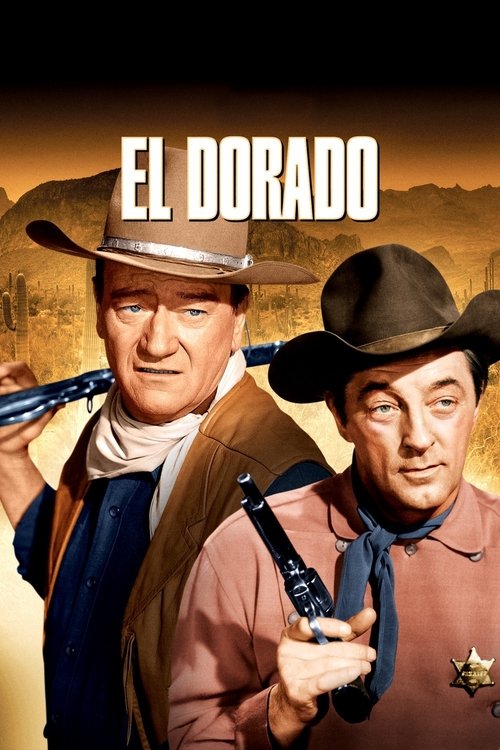
1966
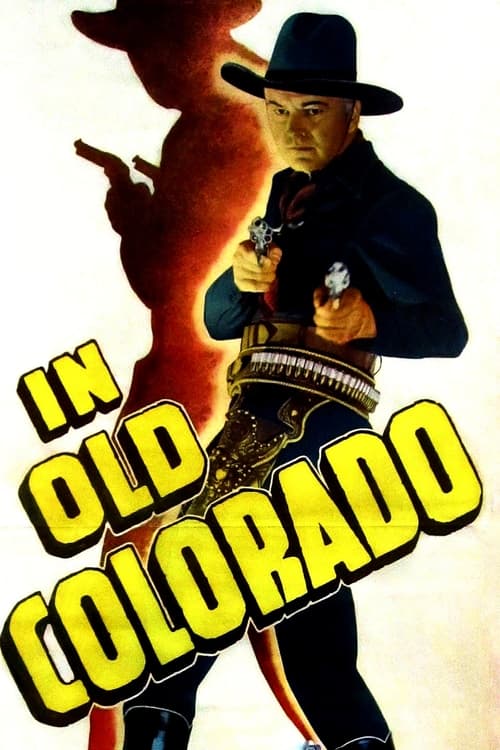
1941
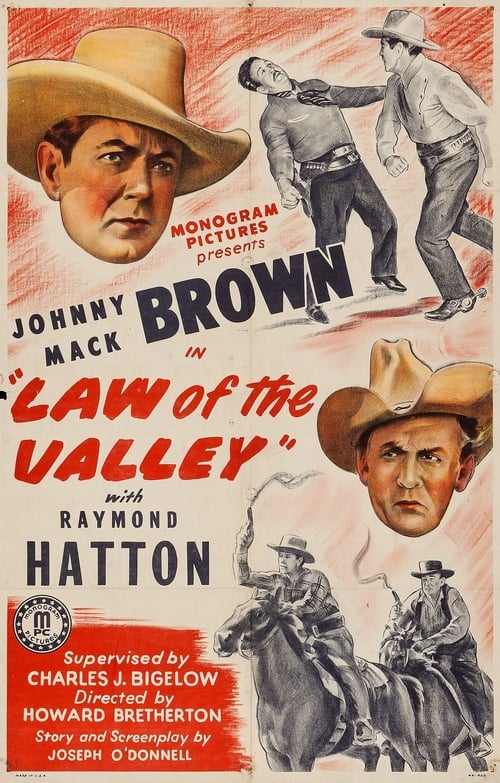
1944
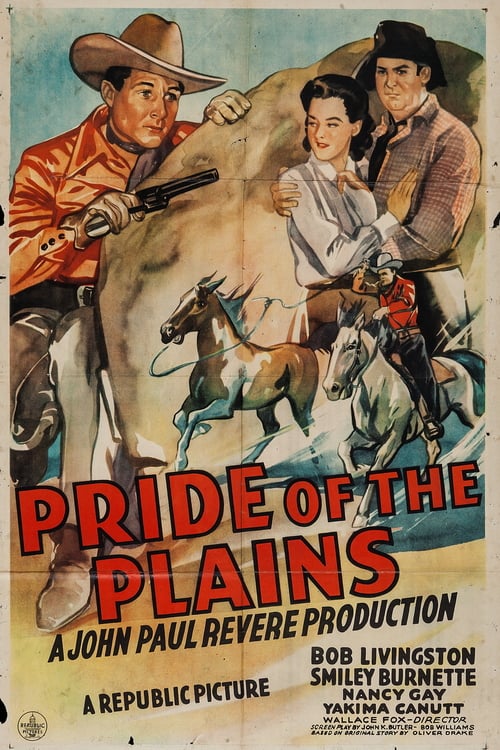
1944
1931
No reviews yet. Be the first to share your thoughts on this movie!
Use the rating form above to leave a star rating and optional review.