
Lazzarella
1957
No user ratings available yet
Representation score: 2.0 out of 10
Representation Score
Minimal
1955
Director
Carlo Borghesio
Runtime
91 minutes
Average Rating
No ratings yetNew Showbiz Analysis
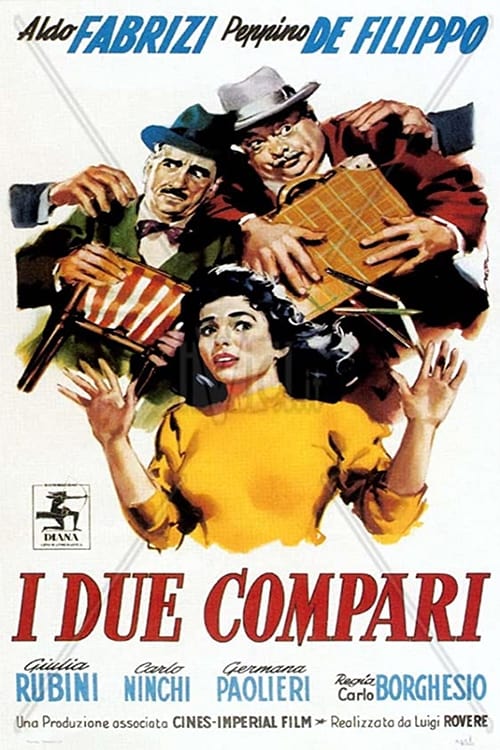
Due compari is a period-typical comedy that emphasizes the maintenance of social order and conventional family dynamics. It provides a snapshot of mid-century Italian life, adhering strictly to the era's established social norms. The film relies on traditional hierarchies, particularly regarding gender and class. While it delves into domestic misunderstandings, it does so within a framework that reinforces rather than challenges existing structures. Overall, the narrative lacks diversity in terms of identity, race, or orientation, focusing instead on the stability of religious and communal bonds within a homogeneous society.
Category Breakdown
The film focuses on heterosexual relationships and does not include any representation of LGBTQ+ identities or critiques of traditional social structures.
Gender roles adhere to mid-century norms. The daughter's emotional protests show her taking a stand, but the resolution upholds male-dominated social structures.
The cast is ethnically uniform, reflecting the localized social context of 1950s Rome. There is no engagement with racial or ethnic diversity.
The story is grounded in Catholic social structures and communal bonds such as godparentage. It reinforces existing class hierarchies and traditional family institutions.
There are no visible or invisible disabilities central to the narrative.
Present on Screen
Limited or Absent
Official Synopsis
Giovanni peddles useless pens in the streets of Rome with his sidekick Francesco, but his college-student daughter thinks he is a rich industrialist. She falls in love with a rich guy and when her father tells her the trust about their financial situation she drops her fiance and refuses food. Luckily, the guy's parents give their consent to the marriage anyway.
1957
1981

1961

1952

1950
1964
1958
1960
No reviews yet. Be the first to share your thoughts on this movie!
Use the rating form above to leave a star rating and optional review.