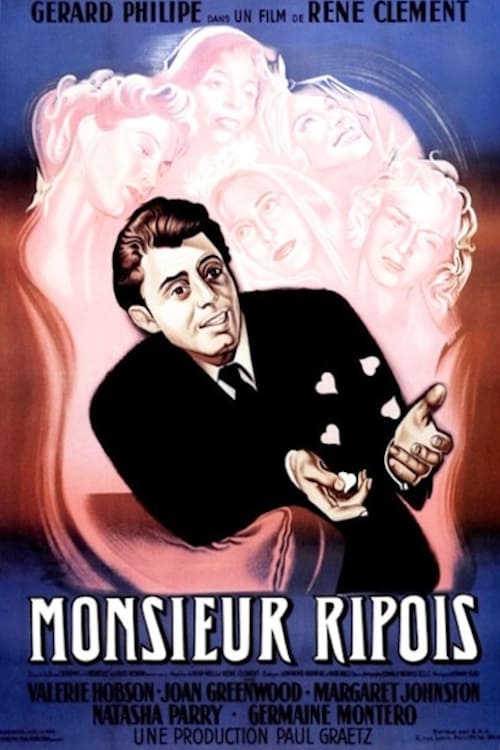
Monsieur Ripois
1954
No user ratings available yet
Diversity score: 1.8 out of 10

1972
PGDirector
Gene Saks
Runtime
98 minutes
Average Rating
No ratings yetSynopsis
A middle aged restaurateur begins to feel the desire to roam and realizes that one day each week, his mother's apartment will be empty all afternoon. He makes several attempts at seduction, only to learn that it is much more complicated and difficult than he could have imagined.
Overall Score
Limited
Category Breakdown
LGBTQ+ Representation
The film operates entirely within a conventional heteronormative framework. There are no queer narratives or non-cisnormative gender identities present in the story.
Gender Representation
The narrative centers on a male protagonist's romantic desires and courtship. While the male lead's comedic failures offer a minor subversion of masculine dominance, the dynamics remain rooted in traditional gendered archetypes.
Racial & Ethnic Diversity
The cast and setting reflect the demographic homogeneity of mid-century New York. The film does not integrate diverse racial perspectives or utilize non-white majority ensembles.
Religious & Cultural Diversity
The story functions within a standard Western, middle-class framework. It focuses on personal morality and individual character flaws rather than engaging with systemic religious or cultural critiques.
Disability Representation
There is no discernible representation of characters with visible or invisible disabilities. The narrative does not include neurodivergent or physically disabled individuals.
Strengths
Areas for Improvement
AI Analysis
Last of the Red Hot Lovers is a traditional character study that adheres strictly to the social and demographic norms of its 1972 production era. The film focuses on individualistic, heteronormative social dynamics, offering very little in the way of systemic disruption or intersectional advocacy. The narrative is built around a male protagonist's attempts at seduction, which keeps the focus on conventional courtship. While the protagonist's failures provide a slight comedic break from total masculine dominance, the broader gender dynamics remain quite traditional. Ultimately, the film lacks intentional diversity. It operates within a homogeneous urban setting that avoids diverse racial, cultural, or disability-related perspectives, functioning instead as a standard mid-century romantic comedy.
1954

1969
1986
1974
1968
1995
1967

1972

1969

2017

2002
1960
No reviews yet. Be the first to share your thoughts on this movie!
Use the rating form above to leave a star rating and optional review.